Safe Haven Fellowship
Safe Haven Fellowship
The NIAS Safe Haven Fellowship supports scholars at risk. It is designed for established scholars, artists, writers, and journalists who are unable to carry out their work in their current location or circumstances due to conflict or war.
The aim of the Safe Haven Fellowship Programme is to protect scholars, journalists, writers and artists whose work is restricted or obstructed by state or non-state actors, by offering them temporary relocation and the opportunity to continue their work. Individuals facing severe infringements on their academic freedom as a result of conflict or war are also encouraged to apply. NIAS does not accept applicants affiliated with institutions boycotted by the Dutch state. The University of Amsterdam (UvA), Maastricht University (UM) and the Royal Netherlands Academy of Arts and Sciences (KNAW) are official partners of this programme.
Practical Information
- A Safe Haven Fellowship is granted for a period of 5 months (Sept-Jan or Feb–June).
- Fellows are provided with an office, research facilities, communal lunch, participation in the NIAS community and commuting travel expenses or subsidised accommodation in Amsterdam. Fellows receive a stipend of €3,500 per month.
- On the NIAS website you can find more detailed information about what a fellowship at NIAS entails and on practical matters relating to the fellowship.
- Please note that a Safe Haven Fellowship is a temporary fellowship and does not offer the possibility of long-term residence at NIAS or in the Netherlands.
- A NIAS Fellowship does not constitute an employment relationship, nor does it qualify as a scholarship. Consequently, NIAS is not required to make social insurance, pension, or unemployment insurance contributions, nor does it provide educational programmes or PhD tracks.
- NIAS reimburses both outward and return travel for selected fellows; however, fellows are expected to organise and undertake their own travel arrangements.
- Fellows are also expected to apply for their visa and obtain their work permit (if required) at the Dutch Embassy in their home country. Local travel costs to and from the Embassy may be submitted for reimbursement.
- For the purpose of issuing visas and permits, NIAS provides fellows with a letter of invitation and applies for their work permit (if required). Only if a fellow is unable to undertake their travel independently due to political, legal, or other restrictions will NIAS attempt to assist in arranging outward travel.
Who can apply?
- The Safe Haven Fellowship program is open to established researchers, journalists, writers and artists. For an overview of all formal requirements, please see the regulations (under “Downloads” on this page).
- Applicants submitting a scientific research proposal must hold a PhD and have a minimum of three years of postdoctoral research experience at the time of application.
- An applicant submitting an artistic, journalistic or writing-focused proposal, is expected to have at least seven years of professional experience in their field as made evident in their provided C.V..
- The working language at NIAS is English. Applicants are required to have full proficiency in English in order to contribute effectively to the fellows’ group and receive feedback on their own research.
How to apply?
- Applications must fully adhere to the formal requirements stated in our 2026 Regulations Selection Procedure NIAS Safe Haven Fellowship. Applicants are expected to have familiarised themselves with all formal requirements stated in the regulations before submitting their application.
- Applicants must submit a fully completed application form through the online application module. The application must be completed correctly, truthfully and contain all the requested information and required documentation. In case an application is incomplete or does not meet the formal requirements for any other reason, the application will be rejected.
- Applications cannot be expanded, shortened, modified, or otherwise altered once submitted. Applicants cannot apply for a fellowship while they already have an application under review with NIAS.
- Applications and all required documentation must be written in English and submitted by the applicant themselves. Applications prepared and/or submitted by intermediaries will be rejected.
- Applications are evaluated based on:
a) A clear research topic and research question;
b) The project’s relation to existing literature in the field;
c) The academic, societal, cultural or artistic relevance of the project;
d) Identification of key problems and the proposed methodology;
e) Feasibility of the time schedule;
f) The intended research output;
g) Fit with the candidate’s academic and/or professional trajectory to date;
h) The added value of NIAS’ interdisciplinary environment for the proposed project;
g) The applicant’s potential intellectual contribution to NIAS and its community.
Past & present Fellows
-

-
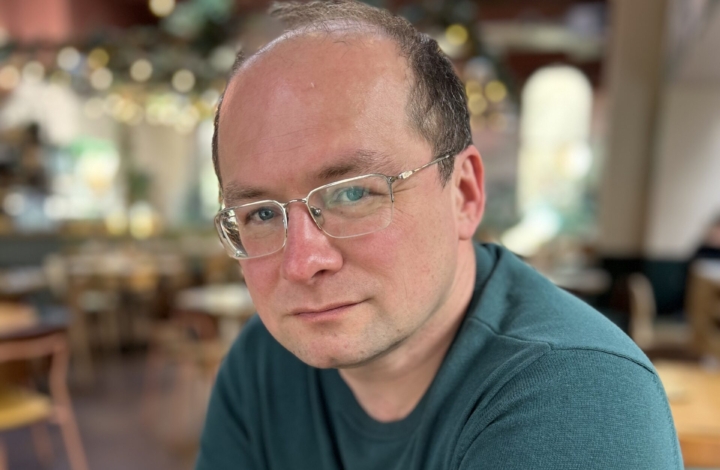
-
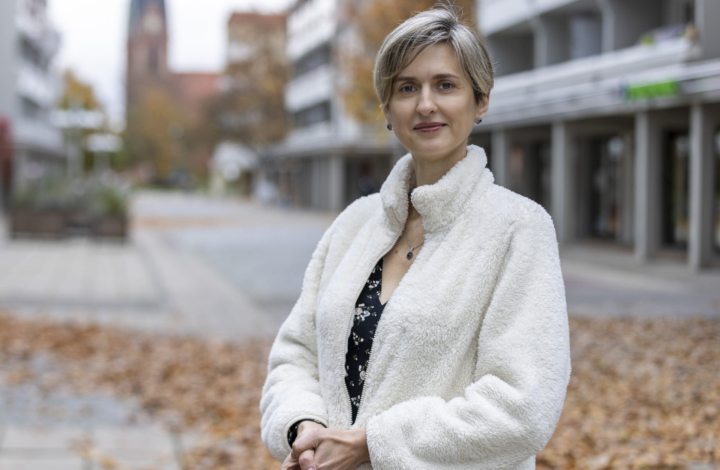
Krylova-Grek, Yuliya
Year Group 2025/26 Disciplines: Communication Studies, Linguistics, Media Studies -
-
-
-
-
-
-
-
-
-
-
-
Gardashuk, Tetiana
Year Group 2023/24 Disciplines: Ecophilosophy, environmental ethics, Philosophy of Science -
-