
Academic freedom in context
Year Group 2026/27
About the topic
Across the United States and Europe, liberal institutions face mounting pressures from rising populism, social polarization, declining public trust, and the complex interaction of legal, epistemic, economic, and communicative forces. Scholars, policymakers, civic organizations, think tanks, and other stakeholders around the world are grappling with a common question: Why are some democratic institutions able to absorb political shocks while others become increasingly vulnerable to authoritarianism? Different disciplines offer different explanations. Political scientists focus on institutions and parties; civil society scholars examine organisations, elections, and citizen participation; legal scholars emphasise constitutional safeguards and the rule of law; and political theorists explore questions of legitimacy and democratic authority.
The group will examine the conditions under which academic institutions are failing to uphold democratic norms and, in some cases, enabling the rise of illiberal and authoritarian politics. It will also explore institutional reforms that can strengthen academic freedom and resilience and better equip institutions to withstand contemporary processes of democratic erosion.
This project will integrate these perspectives through a comparative examination of epistemic institutions and the role they play in legitimising democratic governance. Academia, for example, exists to generate authoritative knowledge, preserve historical memory, and foster critical inquiry. When it is captured, delegitimised, or weakened, opportunities emerge for incremental authoritarian consolidation. The 2026/27 phase of the project will identify the systemic conditions that make academic freedom susceptible to illiberal encroachment while also developing normative and practical strategies for counteracting polarisation, institutional delegitimisation, and autocratic creep.
The project also challenges accounts that attribute democratic decline primarily to individual leaders, party strategies, or voter preferences. Instead, it emphasises the structural and normative conditions that render democracies vulnerable to gradual illiberal transformation. In both the United States and Europe, for example, populist movements frequently portray universities as elitist, ideologically biased, or counter-majoritarian. Such narratives are used to justify weakening institutional independence in the name of ‘popular sovereignty.’ By examining these dynamics, the project will explore how academic institutions can maintain normative authority while remaining socially embedded and publicly accountable.
At the same time, the project avoids deterministic accounts of inevitable democratic decline by identifying institutional design features and governance practices that can enhance resilience through reform and adaptation. Restoring institutional legitimacy requires attention not only to formal independence but also to civic engagement, inclusive governance, and public communication strategies that reinforce institutional credibility.
The members of the theme group bring complementary expertise on the institutional ecosystem that underpins democratic governance, including: how US courts, political institutions, academia, and the media have failed to uphold democratic norms (Wehle); how symbolic liberalism erodes liberalism from within, i.e., by neglecting social justice, weaponizing human rights, and privileging a hegemonic conception of the good over reasonable pluralism, it undermines the very values it purports to defend and narrows the possibilities for genuine dialogue (Hanafi); how citizenship within the academic profession should be understood as encompassing responsibilities beyond the pursuit of knowledge, including the role of moral leadership among scholars in defending academic integrity, fostering democratic values, and sustaining the social responsibility of science in times of institutional and political pressure (de Waal); and the degree to which the commercialisation of academia, understood as also including academic capitalism, interferes with or violates academic freedom understood as an EU fundamental right, and how this right and ‘freedom of the sciences’ more broadly compares with freedom of the arts in EU law and media freedom, all of which are explicitly protected in the EU Charter of Fundamental Rights (Kosta).
For 2026/27, the project will pursue three initial objectives:
- Establish working definitions of academic freedom and institutional resilience.
- Identify contemporary threats to academic freedom.
- Begin mapping institutional strategies for responding to, mitigating, and inoculating against those threats.
A principal output for 2026/27 will be a working paper presenting a preliminary conceptual framework to guide future research and collaboration around these questions.
About the members
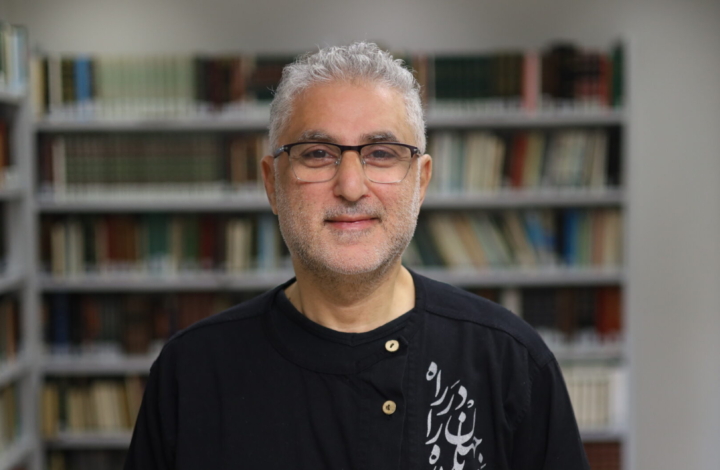
The group, composed of Kimberly Wehle (coordinator, full academic year), Sari Hanafi (first semester), Vicky Kosta (first semester), and Tamar de Waal (second semester), combining expertise from law, sociology, legal philosophy, and EU public law. They will investigate the global erosion of liberal democracy and the rise of illiberal and authoritarian (often described as ‘populist’) leaders, parties, and movements through the lens of historically legitimising institutions, with a particular focus on academia and academic freedom. The project will synthesise insights from multiple disciplines – including law, sociology, political science, EU governance, and moral philosophy – to identify and assess how vulnerabilities within academic institutions interact with broader political and economic forces to create conditions that enable democratic erosion and authoritarian consolidation. The 2026/27 theme group constitutes the initial phase of a broader, multiyear project described below.
Democratic erosion is a phenomenon that cuts across legal, social, and political domains, and understanding it requires perspectives that no single discipline can provide alone. Wehle, a legal scholar, examines the conditions under which legitimising institutions — particularly the judiciary, academia, and independent media — fail to uphold democratic norms and thereby facilitate authoritarian consolidation. Hanafi, a sociologist, explores how symbolic [illiberal] liberalism has narrowed the space for genuine public dialogue, including within academia, and argues for a more dialogical approach to rebuilding a shared common good. De Waal, working at the intersection of law and political philosophy, investigates the institutional dynamics of autocratisation and the civic responsibilities of professional groups in defending constitutional resilience. Kosta brings expertise in EU public law, examining how European legal frameworks can both enable and constrain the commercialisation and political co-optation of key institutions.
Together, the group offers a uniquely wide-ranging and practically oriented perspective on one of the most urgent challenges facing contemporary democracies. How have institutions that historically legitimise democratic governance, specifically the concept of academic freedom, become vulnerable to commercial capture and democratic erosion, thereby facilitating authoritarian consolidation? And which reforms can enhance resilience and inoculate academic institutions against autocratic creep?
Multiyear initiative
The four scholars will lay the groundwork for a second, multiyear iteration of the theme group that will extend the analysis to the judiciary, independent media, and the arts. Over the course of the broader project, the group will deepen our understanding of the institutional dynamics contributing to the erosion of liberal democracy while developing practical policy recommendations to strengthen democratic resilience and adaptation.
Anticipated outputs include: developing working definitions of academic freedom, institutional resilience, journalistic freedom, and artistic freedom; refining concepts of liberal democracy and the rule of law; identifying and comparing structural differences across institutional domains, jurisdictions, and political contexts; analysing comparatively the relationship between these freedoms and democratic governance; identifying and evaluating historical and contemporary strategies for mitigating authoritarian pressure; and developing frameworks for proactive institutional resilience and democratic renewal.
Although part of the analysis will focus on the United States, the theme group’s location in Europe provides a valuable comparative setting for examining how different constitutional traditions, institutional arrangements, and historical experiences shape both institutional vulnerability and resilience.
Ultimately, the project seeks to advance a theory of democratic guardrails grounded in institutional interdependence. Liberal democracy is sustained not by isolated institutions but by a mutually reinforcing ecosystem of legal authority, epistemic credibility, and communicative freedom. When these institutions weaken or become fragmented, democratic vulnerabilities increase, creating opportunities for authoritarian consolidation. When they reinforce one another, democratic resilience is strengthened. By combining comparative European and American analysis, interdisciplinary scholarship, and normative evaluation, the project will provide a framework for understanding institutional fragility, diagnosing democratic risk, and designing reforms capable of safeguarding liberal democracy in the face of contemporary challenges. Its findings will be relevant not only to European policymakers, civil society organisations, and scholars, but also to broader global debates on preserving and strengthening democratic governance in the twenty-first century.
Theme group participants



-
 Theme Group
Defamiliarizing Geslacht
-

-
 Theme Group
Why do adults change their beliefs?
-