Academic freedom in context
Year Group 2026/27
About the topic
Courts, universities, and independent media have long served as pillars of democratic governance; when they are captured, delegitimised, or weakened, the door opens to incremental authoritarian consolidation.
The Theme Group Academic freedom in context investigates this global erosion of liberal democracy through the lens of these legitimising institutions. It pursues two interconnected goals: to deepen our collective understanding of the factors driving democratic regression and the broader trend of autocratisation, and to develop practical policy solutions that can strengthen liberal-democratic resilience against authoritarian takeover. In this first phase, the group synthesises findings from across academic disciplines to identify how flaws within sector-specific institutions interact to create the conditions for autocratic creep — laying the groundwork for a second, multi-year iteration of the project.
About the members
The group brings together Kimberly Wehle (coordinator), Sari Hanafi, Tamar de Waal, and Vicky Kosta, combining expertise from law, sociology, legal philosophy, and EU public law.
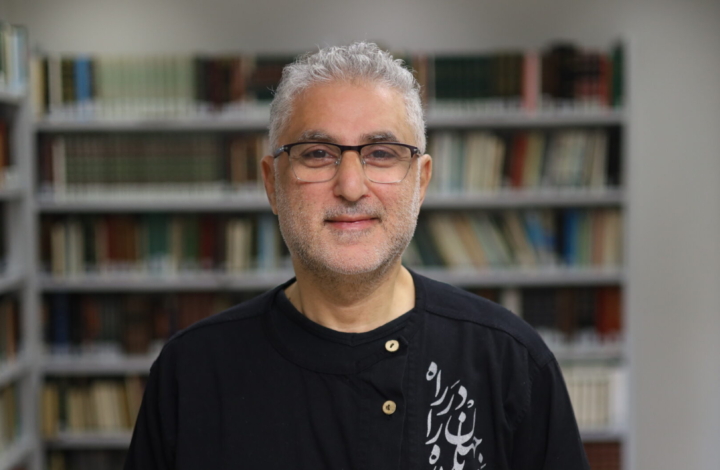
Democratic erosion is a phenomenon that cuts across legal, social, and political domains, and understanding it requires perspectives that no single discipline can provide alone. Wehle, a legal scholar, examines the conditions under which legitimising institutions — particularly the judiciary, academia, and independent media — fail to uphold democratic norms and thereby facilitate authoritarian consolidation. Hanafi, a sociologist, explores how symbolic liberalism has narrowed the space for genuine public dialogue, and argues for a more dialogical approach to rebuilding a shared common good. De Waal, working at the intersection of law and political philosophy, investigates the institutional dynamics of autocratisation and the civic responsibilities of professional groups in defending constitutional resilience. Kosta brings expertise in EU public law, examining how European legal frameworks can both enable and constrain the commercialisation and political co-optation of key institutions.
Together, the group offers a uniquely wide-ranging and practically oriented perspective on one of the most urgent challenges facing contemporary democracies.