Transcript Room to explore, podcast 7: Living In a More Than Human World
Introduction
Annick van Rinsum
Welcome to this podcast by NIAS, the Netherlands Institute for Advanced Study in the Humanities and Social Sciences. A place for researchers to find the time and space to fully pursue their curiosity and ask new questions. My name is Annick van Rinsum, and in this episode I’ll be speaking with Rahul Rao and Timothy Stacey.
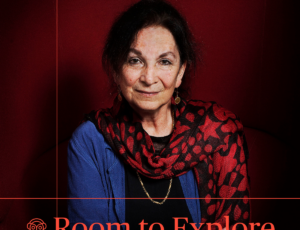
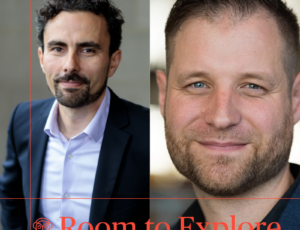
Rahul Rao is Reader in International Political Thought in the School of International Relations at the University of St. Andrews and a professorial Research Associate at SOAS University of London. He’s the author of the books The Physic Lives of Statues: Reckoning with the Rumble of Empire, Out of Time: The Queer Politics of Post-coloniality, and Third World Protest: Between Home and the World. He is also a member of the Radical Philosophy Editorial Collective.
Timothy Stacey is a Postdoctoral Fellow at the Urban Futures Studio within the Copernicus Institute of Sustainable Development at Utrecht University. His research explores the intersection of religion, culture and transformative change, with a particular focus on the limitation of rational liberal politics in capturing the public imagination. He is the author of the books Saving Liberalism from Itself: The spirit of political participation, Myth and solidarity in The Modern World: Beyond Religious and Political Division and co-author of Return of The Native: Can Liberalism Safeguard Us Against Nativism.
Rahul and Timothy are both NIAS fellows 2025-2026. Their work touches on similar questions, which is why we thought it would be a good idea to bring them together. Or as they put it themselves: “conversations with each other are very rewarding.”
Podcast
Annick van Rinsum
Dear Tim and Rahul, welcome to the NIAS Library.
Timothy Stacey
Thank you.
Rahul Rao
Thanks.
Annick van Rinsum
Could you tell me a bit about your academic background and how you slowly became more interested in the natural environment?
Rahul Rao
So I am a political theorist and an international relations person, I guess. But I started my education as a law student, got interested in politics and studied international relations. I’ve always been interested in the politics of social movements. And the work I’ve done to date has mostly been around anti-colonial, gender, sexuality, race, caste, those kinds of movements. So, my work has been quite humanist with a focus on the Global South, so I’m very influenced by post-colonial theory and I’ve tried to bring that kind of sensibility to all the work I’ve done.
I guess my turn towards the, what’s being called, the more than human world, has been quite recent and it has been prompted by some of the things that almost everybody alive in this moment feels, which is the sense that the planet is in some kind of crisis. Although I guess people respond to that sense of crisis in very different ways. But it’s also been coupled with shifts in my personal life. In the middle of COVID, I moved from London, where I lived at the time, to the Isle of Mull off the west coast of Scotland, where my partner is based. It’s quite a sparsely populated island relative to the places I’ve been used to living in before. And the more than human environment there is overwhelming in the best possible way. Humans are a smaller presence than what I’m used to. And I think that has opened my eyes to thinking about a world beyond humanism, beyond human beings and their things and mental constructions and so on and so forth. So, I guess that’s prompted my change in interests and preoccupations.
Annick van Rinsum
And formerly, how did you become an international relations person from studying law?
Rahul Rao
So, I was studying law between 1996 and 2001 in India. This was a moment when the Indian economy was liberalising, opening up to international trade and also being buffeted more and more by international economic shocks and currents. And, India had also just signed up to the WTO and had entered into a host of legal agreements around all sorts of things that changed the way production and consumption were regulated. There was this real sense that the locus of power had shifted from the national to the international and that made me interested in international politics and in the kinds of negotiations that went into making law. I began to think of law as the end product of a political process rather than a driver, and that made me more interested in politics because I had the sense that politics was where the action was and law was the end result. That made me want to study politics and particularly international politics.
Annick van Rinsum
And you, Tim?
Timothy Stacey
Personal circumstances have played a big role in my academic life as well. I grew up in a sort of lower middle-class neighbourhood in the UK. And it wasn’t as if anybody was in great need of – I don’t know – food or shelter, but at the same time it was a town where nobody was really expected to amount to anything. Then all of a sudden, for reasons that were entirely out of my control, and in a way that I didn’t know was possible, my dad suddenly got a new job where he was an accountant for an oil firm in Moscow in Russia. And I was suddenly at a school with very wealthy people basically, and it was a huge amount of fun. I had a great time, as you can imagine being a teenager in the sort of – what would you call that – the wild east of Moscow in around 2001.
But something really grated with me and it stayed with me forever, which was the difference in life opportunities between my old friends my new friends. And so, that first of all led to a deep kind of philosophical and theological questioning and so I did my undergraduate, indeed, in philosophy and theology, trying to ask: what are the sources of ethical behaviour the sources of solidarity?
But then I got to the end of my undergraduate and, at that moment, as I was moving into my master’s, that was the 2008 economic crisis. So, again it was this huge moment of reckoning, this time on an international political level where I was thinking: where does concern for the other come from again? I mean, I’m being reductive in this narrative, but essentially, a crisis caused by banking or by deregulation and resolved by taking away benefits from poor people. So, how was that normalized? You know, how do we create a society in which people have more incredulity for things like that happening? And I didn’t feel like philosophy and theology had the answers to that, so I moved into social scientific, ethnographic research with community organisers in London.
I mean, in the meantime, there were also the riots in London, which arguably were intimately related to the economic crisis and the response to it. So, I got drawn into organisations working on building community, building solidarity from the ground up. And I wanted to understand: “Okay, so how do they do it in this radically, ethnically, ideologically, economically diverse space like London? How do they create solidarity across differences? What are the narratives? What are the rituals?”
I then took this emergent framework I was developing, about myths, rituals, magic to Canada to understand social and economic justice activism there. And it was in Vancouver, and this is where the experience gets very similar to Rahul’s, because I went there, really in a way to do comparative exploration of Vancouver, to compare it to London. And I guess I was quite ignorant at the time but I just did not realis. I didn’t understand the relationship with Indigenous peoples there. And I just had no idea how beautiful it was going to be. And somehow engaging with activists there, it always comes back to the more than human world and the sources of inspiration.
I remember I laughed actually – which is very inappropriate for an ethnographer – the first time somebody said to me […] I said: “What motivates you to do what you do?” And in London, the question would normally be a story similar to that which I just told about, differences in life expectations and how angry it made people. And somebody said, instead of that: “Whales.” And then two years down the line of being there, I started to realise, I was also motivated by whales and found myself crying as I listened to somebody telling the story of animals who had saved them, redeemed them, or simply, who were suffering through no fault of their own. So yeah, I then moved into sustainability research. You know, what motivates people to act in the interests of non-human others? And now I’m here doing this project on ecology and belonging.
Annick van Rinsum
[Rahul]You also have a story about whales.
Rahul Rao
Yeah, that’s why I laughed.
I am working on a project that is trying to think about how our deepest ideas in political theory would have to shift if we took animal life seriously. And the particular animals I’m thinking about are whales. And I don’t have an adequate explanation for why that’s where I started. In a sense, it’s an arbitrary starting point because there are so many vantage points from which to conduct that sort of inquiry. But, it’s also not arbitrary because, where I live in Mull, the water is full of cetacean life, whales and dolphins. We see them in the sea, not very far from where we live. My partner’s a marine zoologist so sometimes, I feel like I live with a whale-nerd.
I’ve begun to realize that to be interested in whales, is really to be interested in their world and that means being interested in all sorts of things, from what they eat – krill plankton- to the ways in which they flourish in their worlds, what it is they need; food, water, an environment in which to navigate and mate and do all sorts of things. And also, the threats that they confront, whether that’s plastic or pollution or entanglement in fishing nets or acoustic interference or whatever.
So even though my starting point for the project has been this arbitrary, but also animated by love and affect experience, it means being interested in all sorts of other things in the entirety of the world.
Timothy Stacey
I wanted to ask a question, if I may, because I was really interested in you saying that. And you have reversed towards the end there, but when you said “arbitrary,” it seemed actually that there was a real aesthetic reasoning behind it.
I’ve had experiences like this too, where the other sort of presents itself to you, or forces its way through your buffered self and demands your attention in some way. There’s this kind of phenomenological breakthrough or something, and I’m wondering if that reasoning behind your choice for whales, if that also, in a way, shapes the way that you write and think about it?
Rahul Rao
Yes, I’m sure it does. I should say, I haven’t written a huge amount about whales yet,
but hopefully that will change over the next few months. But yes, it’s certainly… […] I mean, think about how people feel and react when they see whales, almost universally. No matter how many times a person has seen – and I know this from watching zoologists who have probably seen more whales than the average lay person, or maybe fishers or people who live and work in a marine environment of extended periods of time, whatever they might be – the experience is often: people start crying. They’re really moved by the moment and you know you can try and surmise why that might be, this creature that’s larger than life that is in some ways so different but is also relatable. A mammal in an environment that is not one in which humans as land mammals are very well equipped to be in.
A lot of queer and feminist writers have been inspired by water life, underwater life. Black feminists, for example, see a kind of kinship with the history of enslaved people being transported across the water and sometimes losing their life in the middle passage, and underwater life as kin in relation to that historical experience. Queer writers and trans writers have been inspired by underwater life; making a life, flourishing in unpromising worlds from a mammalian point of view. That has been a source of connection. So, I think there is an infinite range of stories to be told about why people are moved. And maybe every one of those stories is a very individual one at some level. But certainly, the aesthetic and the emotional and the affective and the sheer physicality of that experience is doing a lot, in terms of why we’re fascinated by and drawn to these creatures.
Annick van Rinsum
I feel like you both relate in a very similar way to politics, or your understanding of what that can mean and what that means to you in your research and for our life and every life. And what life can be lived in certain ways, what stories we have about it. It’s a big question, but could you both tell me: how do you relate to this concept of politics in this way? Maybe we can start with you, Tim?
Timothy Stacey
Yes, I felt happy to start also, because I’m sort of riffing off of what Rahul was saying earlier about politics preceding law. I think for me, increasingly, although the end goal I’m interested in is politics, I often think about culture as preceding politics. So, I want to change politics. But my main interest is in culture. How do you reshape what people imagine as being possible and desirable? And seeing that as fundamentally the basis of our politics,
you know, the kind of structures that you allow to be built up around you or that you embrace as they are built up around you, of course, depends on the kind of life that you consider desirable and achievable. So, I guess that’s how I think about politics as culture.
Annick van Rinsum
And what I also find interesting in this, is that, on the one hand, it kind of shapes which lives can be lived or are recognised. And in other ways, even though there are certain hegemonies that ignore certain forms of life, they do still exist. How do you see these two things?
Timothy Stacey
I think I see that as a kind of opportunity. I get quite excited by – I guess what you could call the unassimilable, you know – that which refuses to be assimilated into the hegemonic system. So that for me, can be fascinating, whether that’s particular forms of protest that don’t fall in line with people’s expectations of what protest ought to be like, but also certain ways of living, certain creatures indeed, whales even.
Rahul Rao
I think similarly, my interest in politics, at one level is about trying to figure out how things work and how things fit together. What is it that drives the world as it is apparent to us? And some of that is about understanding what counts as power, being able to map where it lies. Who or what has it and who doesn’t, and how is it transformed from one form into another? How does it move between places, between agents, actants? And what does it do? What are its effects in the world? But there’s also a huge normative dimension to all of these questions, which is the problem of working out how life continues, how it might keep going, for want of a better way of putting it. How do we live together in the midst of this irreducible difference, the differences that we have amongst us?
Timothy Stacey
Can I jump in on something here as well, though? Because I’m thinking there’s that sort of embrace of all of life. Going on in what you’re saying a little bit, and I know you read and have also been somewhat critical of Donna Haraway’s work and I have my own issues with it. But one of the things I find very inspiring is this notion that you are forced to choose. So, for me, that’s the ultimate normative difficulty, choosing what life continues and what life ends and who gets to be involved in that choosing process.
Rahul Rao
I love Donna Haraway’s work. I mean, it’s been world opening for me and for so many people. And the thing that I particularly admire about her work is her refusal to offer easy solutions or slogans, or easy ways out of dilemmas. And one thing that she’s often quoted for saying, is this reframing of the crucial question from […] You know, the question that many animal ethicists and philosophers often ask, which is about harm to more than human life. And she says the question is not whether something is killed or not, but whether something is made killable, whether it is rendered killable, just by virtue of what it is. There is no getting away from dying, she says, but it is about learning to live and die well together. Cultivating a sense of responsibility and she often hyphenates that word “responsibility”. How do we respond to each other as if, in ways that acknowledge the sentience, the livingness of each other? It’s, as you might guess from that potted description, it’s not a worldview that lends itself to easy problem-solving ways of thinking about, you know: “is it ok to do X or Y?.” It doesn’t deliver an answer there.
I guess where I’m critical is, and this is not a critique of Haraway alone, but of a lot of multi-species more than human thinking is that it has, yes, really attuned us to the ways in which we are entangled with all sorts of things in the world. A lot of the thinking around assemblage coming out of Deleuze’s work has also helped us with this; how we connected to animals, plants, minerals, things. We have a much more complex view of how the world is constituted. So complex that I think sometimes we’re paralysed with indecision about how to extricate ourselves from the more damaging entanglements that we know to be all around us.
In the attempt to have a more humble sense of what humans do and can do and should do, I think we are at risk of downsizing human agency to the point where we are not adequate to the task of dealing with the Anthropocene and the mess we have created. And so, what I am struggling to get to in my work is: how do we hold intention with each other, both a recognition of this complexity and entanglement. But also, an ability to say something meaningful about what we can and should. And, who the “we” here is, is obviously very complicated. But however, we understand that “we” – what is our responsibility? how do we then execute that responsibility that we’re all searching for an answer to?
Timothy Stacey
So, it’s a bit like disentangling and re-entangling.
Rahul Rao
Yeah, which is really what my NIAS project is all about.
Annick van Rinsum
What are your first ways of looking to get more of a sense in how to approach this?
Rahul Rao
One leaf I take out of Haraway’s book: Haraway has this very situated, grounded way of looking at particular multi-species communities and taking seriously how they are thinking about these questions.
So, I’m interested in the problem of whale entanglement in fishing gear and the ways in which that causes mortality and premature death, and the kinds of thinking within communities of marine biologists and fishers and anyone who is in whale worlds in some way or another. How they’re thinking about disentanglement and prevention of entanglement. And it’s a topic that interests me because this is an entanglement that everyone agrees is bad, and in some very interesting ways that pushes against the occasional tendency to celebrate entanglement, to celebrate recognitions of entanglement as a salutary caution against human exceptionalism and individualism.
Annick van Rinsum
Also, entanglement is more complex than we would like it to be.
Rahul Rao
Of course, yes. And I think if we think about entanglement in a much more dynamic way, a process rather than as a state, a fixed state, a picture of how things are at this moment. We would think of disentanglement as being part of it, as a never-ending process of connection and disconnection. And I think we would be more agnostic about it ethically.
Not all entanglements are good things, and part of what we’re trying to work out is: where are they life enabling and where do they cause premature death?
Annick van Rinsum
And what does it mean when we understand it as a process?
Rahul Rao
[…] The reason I hesitate is because that’s a very big question. I think it has implications for […] I don’t want to generalise, but I tend to be a very visual person and I find images very helpful to think with. But the images I tend to think with, tend to be photographic images. They tend to be snapshots of how things look at a particular moment in time. And partly that’s a way of managing complexity. It’s a way of freeze-framing something, trying to pause long enough to understand what’s going on in that place and time. But the risk of that way of thinking, is that it assumes that things have always been like this or that. Things are so sedimented, that it’s going to take quite a lot to dislodge them. And often that is the case.
But to forget process, is to forget that things have not always been like this and will not always be like this. It is to miss, I think, the energy in the picture, the sources of dynamism and stasis, all of those things that you’re much more likely to get in a film than in a photograph or in a series of photographs, if you can hold them all in your visual frame at the same time. And so, I think, it’s how do we infuse that sense of dynamism into all our concepts, whatever they are, in a way that doesn’t allow them to sediment into something that’s too hard or rigid.
Annick van Rinsum
Thank you. You also said that you are interested in changing politics. What does that look like for you?
Rahul Rao
Can I jump in with an additional question there?
I liked what you were saying about being interested in the constitution of desire. What makes people want what they want? And for me, that introduces all sorts of other questions. Like, what would it mean to want people to want something other than what they want? Is this the mind of a social engineer on high? Or do we want people to want different things on their own? And if so, what role is there for an analyst or an activist or an instigator? What does change mean? What does inducing change in a non-patronising way look like?
Timothy Stacey
I mean, that’s really interesting and that’s a balance that I’m constantly having to strike. I work in a group called the Urban Futures Studio. And, you know, there are all these tensions in the group, and I mean productive. But, one of the strongest is possibly that between those who want to work out what the levers are they have to pull in order to bring about radical change, versus those who think that’s the wrong question entirely and we should be thinking about how to democratically organise. So, the people on that side are looking at the lever-pullers and saying, “Well, you’re manipulative, you’re presumptuous.” This is making it sound like we have big arguments in the group. That’s not the case, I’m just characterising these camps. But on the lever-pulling side, you look at the radical democrats and think, well, that’s an age-old platonic question, right? But what if the people want the wrong thing? That highly utopian notion, that if you get the process right then people will ultimately want the best possible things… It’s a scary position to hold faith with and I’m constantly being pulled between the two.
Rahul Rao
It sounds like a tension between the technocrats and the democrats. But I wonder if maybe, we could reframe staying with that tension, which I think is really useful to think with.
That the world is not divided into people who want the right things and people who want the wrong things, but that these are warring instincts within all of us. And maybe the question for politics is, “how do we cope with those warring instincts within all of us?” I’m not a fan of the American Constitution at all, but I do remember reading when I was first beginning to teach politics, The Federalist Papers, and the writers of these, you know,
the Federalists, the writers of these documents, were really preoccupied with that question of these basic warring instincts in, you know, how do we design political institutions that recognise and deal with our worst instincts, knowing that they lurk within us.
Annick van Rinsum
What I would like to add in this is also: what we want doesn’t come out of only ourselves.
It also comes out of the world that we live in and the political realities it has created.
So maybe, if I want something, it is because in this political system, it makes sense for me to want it, but this political system is corrupt.
Timothy Stacey
Exactly, and that’s where I’m at, at the moment. I think I’m very much caught up in this feeling of acceleration of the world towards things I’m very uncomfortable with. So, without having a very clear idea of what is good and what is bad, I certainly have an instinct for what is better and what is worse.
So, in my past work right up until about 2022, I was very much about: politics should always be the generational work of building democracy from the ground up. I still believe that. But I also think we need to take urgent action now and be at least manipulating back towards something acceptable at the same time as doing that deeper, longer-term work. I’m interested in the environment. But in my last paper, I was comparing Nazism and the Civil Rights Movement because I just wanted to know, how did how do they do that? How do they so convincingly and rapidly transform people’s perception of what is desirable and possible? And […]
Annick van Rinsum
How did they do that?
Timothy Stacey
I suppose I could say briefly, I think it’s about identifying the dominant symbols in society. So, regardless of your political positioning: what are the most powerful symbols for mobilising people to act? And then thinking through the dramaturgical techniques through which to convincingly claim ownership of those symbols. This is not something I discussed in my last paper, but I think the easiest example is the apartheid movement and the strong leaning on both sides, pro and anti-apartheid, of the crucifix of stories from Christianity, leaning into all of that symbolism, which shows you simultaneously that this is fundamental for mobilising society.
But also, that it’s radically flexible when it comes to content and I think that’s something the left gets very scared about at the moment: “oh it seems the right has hijacked the idea of freedom or it’s hijacked the idea of democracy”, and I feel almost hurt or betrayed that the true meaning of these terms has been distorted. And what I feel instead is that these are very layered symbols that achieve their meaning socially through centuries and not through having a fixed content, but through being associated with multiple different movements. And so, the way to take dominant symbols, like freedom, like the notion of democracy, like a national flag back, is not to assert, “This is what they really mean,” but, to think about how to convincingly reinterpret them.
Annick van Rinsum
If you want to have success in making it more popular, you need to be a bit more opportunistic about using it, maybe.
Timothy Stacey
Yeah, and the word that hurts me a little bit when Rahul says it – but it hurts because it’s true – is a little bit manipulative, I think. Like, accepting that on some level, maybe you have to do that. And I am personally in dialogue. Although I haven’t got there in my work yet, I see a dialogue going on between that more manipulative, critical thinking about how to convincingly interpret these symbols and on the other hand, doing that grounded emergent work which is telling you this is where we need to be going. So, I’m working with some people to learn, this is what good politics looks like. And then I’m looking at the other end of the spectrum and saying, this is how you convince a wider cross-section of the public to embrace that kind of politics.
Rahul Rao
Maybe a less grating word would be persuasive. We’re trying to tell a persuasive story about how the content that, that symbol had in the past, links to something in the present. So, for example, in a previous project, I was very interested in the politics of statues and why they’ve become controversial in struggles around race and caste. 2020 was a high point of
that kind of activism, Black Lives Matter. And the reason those statues became very emotive, is because some people were able to tell a very persuasive story about how the figure depicted in the statue, the things, the processes, the events they were involved in, how they linked up to some contemporary ongoing material injustice; structural racism of institutions and so on and so forth. To me, that’s not manipulation, or I think the word I used was patronising. It is telling a story that, maybe, the listener hasn’t considered and really giving them an opportunity to rethink where they are and the reasons why they are where they are.
Timothy Stacey
Can I jump into something now because I’m finding this wonderful because that’s something I’m really stuck on as well. When do you choose iconoclasm and when do you choose reinterpretation? So, some statues have to be thrown in the water, whereas others perhaps lend themselves to being reinterpreted. I don’t know, I wonder if […]
Rahul Rao
I don’t think the book has a straightforward answer to that. In fact, I think I would say, there isn’t a single answer that fits in every situation. But having said that, one of the things I watched happen in 2020 was many instances in which statues were torn down and destroyed. And many commentators were very allergic to that, made very uncomfortable by it, “This is the destruction of history,” etc. But the joy in the crowd was really something to behold. People found these moments cathartic. There was a moment of like, even though structural racism in institutions had not magically ended, there was a moment of coming together, of community, of feeling like the world could be changed, of finding each other, of joy. And I think that, that is really valuable in its own right. Regardless of what happens next in that place. So, I would sometimes make an argument for that kind of destruction.
Contextualisation, recontextualisation is often a very powerful way forward. It doesn’t always disrupt the aesthetics of – think of those Confederate statues on 20 feet high plinths. How do you disrupt the power of that kind of object with a size 10 font plaque at the bottom? There are more imaginative ways to do it, sure. But I think there’s a place for contextualisation, but it doesn’t always work.
And maybe a final thought here on this question would be, I think actually German has multiple words for monuments and maybe Dutch does too. So, the Germans have a word for monuments that are honorific and monuments that admonish and warn. I think “Denkmal” is sort of the generic term, but “Ehrenmal” and “Mahnmal” have different connotations. And so, the question here would be, can you transform a monument that celebrates into a monument that admonishes and warns? Sometimes yes, sometimes you can’t. The aesthetics of it is just baked in, in such a way that you have to do something much more disruptive or distinct or different to have that effect.
Annick van Rinsum
I’m also wondering if we can untangle the difference between manipulative and persuasive. And my guess would be that you try not to hide information or intentions. But maybe you have some more thoughts about it.
Rahul Rao
But you also don’t hide what you’re trying to do. You don’t say, “oh, actually, this is my intention, but I’m not going to tell people that that’s my intention. I’m going to act as if my intention is something else.” I think persuasiveness is about being actually as transparent as possible about what your objective is. What world do you want to bring into being?
What and why? And why would that world be good for your listener too? You know you’re welcoming them into that world rather than shutting them out. That, to me is the difference between these words that made us feel a bit more edgy.
Timothy Stacey
I suppose it’s also thinking about power, which you mentioned earlier; power over versus power with. And in terms of persuasion too, right? Am I reinterpreting this with somebody and who is, or who are those people and who deserves to be involved in the process of reinterpretation? That makes a big difference to me. Then I feel I’m not manipulating but inviting people into a process.
Rahul Rao
I mean, it’s possible we’re being too optimistic and that there are people who simply don’t want to be part of this world with me at all. No matter what story I tell. So, it’s intersubjective. It relies to some extent on the willingness of the other person to also be
in an exchange, in a dialogue in which both of us are open to being shifted in some way. That’s sobering, because then I have to think, what am I willing to revise about my persuasive story?
And I think also important not to lose sight of power. Everybody is not equally situated in these stories and conversations and dialogues, which is why, to go back to your earlier question about what politics is. A really big part of doing politics is, is making visible where power lies. And, you know, some components of power have a tangible material reality. It’s not just in the eye of the beholder. It is a real thing that moves stuff in the world and stops other things from moving. So, keeping that in the frame and the story all the time, I think is really crucial.
Timothy Stacey
And including when it comes to cultural production rights, like who has the right and the resources to be reinterpreting certain symbols.
Annick van Rinsum
Well, you’re in the business of reinterpreting belonging.
Timothy Stacey
Yeah, I was thinking about, you know, regimes of living and dying and who gets to live and who gets to die. And I think that’s increasingly what I’m seeing in terms of ecology and belonging. So that’s the name of the project I’m working on here and I’m thinking through.
I mean, essentially, the argument is that environmental policymakers and scientists have largely lost a language of belonging, and that, on the other hand, the people who are best at talking about belonging – or most persuasive, manipulative, at the moment – are on the far right. But then I start thinking about the environmental politics and the ways in which we are and are not attuned to belonging.
And increasingly, I think there’s this kind of – what I’m for the moment calling – a belonging lost narrative that pervades a lot of Western society. And I would include environmental politics, whereby belonging was somehow much more authentic in the past, prior to modernity, prior to capitalism. When we lived in rural settings, danced around in circles and sang songs together, just like the opening scenes of Lord of the Rings. And yet, at the same time, this acknowledgement that, that belonging has to be parted with. We have to say goodbye to it in order to modernise, in order to have a society with greater levels of luxury, in order to lift people out of poverty and so on and so forth. So, it’s this kind of inherent nostalgia to how we think about belonging.
And this more authentic belonging of the past, I feel like in our politics, a lot of environmental politics at the moment is around who gets to claim that authentic belonging. So, at the moment, Indigenous peoples do. They’re not in truth really sufficiently protected in that. But there’s this increasing acknowledgement that certain types of green sustainability transitions, as well as forms of extractive capitalism, are a threat to their authentic way of being. And yet – and by the way, I’m not by any means trying to draw moral equivalents here – and yet, the more authentic belonging of, say, Dutch farmers is treated as purely problematic and backward when it comes to the changes that they’re not willing to embrace for whatever reason. So, then the politics becomes about who gets to claim this richer life and who doesn’t.
Annick van Rinsum
But also, there are some differences that can explain this different treatment. Because I’m assuming that these Indigenous groups are living in harmony – whatever that means – with their environment and Dutch farmers are not. And that’s the whole point why we need to change.
Timothy Stacey
Yes, I think to some extent that’s true, but I don’t think that is sufficient to explain what’s going on.
I think there is something about a refusal, or an inability to meet people where they are at, in terms of where politics really hits for them. Because I think, yes, in terms of morality, in terms of international politics, in terms of the climate, I’m broadly on side with the policymakers in this regard, when it comes to the farmers’ protests. But, just in terms of where politics lands for people and why a landscape is meaningful to them, that’s something that we’ve really lost the ability to engage with people on. And engage them in that process of letting go.
To push back for example on your point more directly, I’ve been involved in Indigenous-led tree defending on the West Coast of Canada and it was always very important to say Indigenous-led. And then, there would be people of the same Indigenous group who said that they just didn’t want us there on their land defending those trees, because actually they had a deal with the logging company where they got a certain amount of the profits of the trees being logged. Now, the answer given to me by the people by whom we were led was always: “Well these people are sort of acting in bad faith or they’ve been so deeply colonised, or they’re so implicated in colonial structures that they’re making the wrong choice.” But, then, on some level, you do end up getting down to Indigenous-led, means, I want to be led by the Indigenous people whose lifeways agree with my environmental politics.
So, I’m just suggesting there are complications there. And by the way, if I could do it all again: going back there, I would be on the same side and I’d be standing there with them. But I just mean, it’s complicated, the way that we valorise certain people because they fit with our idea of how the world should or could be.
Rahul Rao
Oh, that’s really interesting. I mean, recognising, of course, that all communities have dissent within them and disagreement. I think that’s a pretty uncontroversial thing to think. And actually, not recognising that, would itself be a form of patronising, I think. But just to go back to the juxtaposition of Indigenous and Dutch farmers, and the appearance of the same kind of language, perhaps, in both communities, and what do we make of that. I think that’s really interesting.
But this is where I think, again, thinking about power in quite concrete terms is very useful, because there is a world of difference between being an Indigenous community marginalised by settler colonialism and having had to fight it for hundreds of years, versus being at the center of a white ethnos, whose material prosperity you may not have enjoyed as a result of a class system within it, but still being able to claim a kind of whiteness and the forms of historical privilege that go with it. Now both groups might use the same language to legitimate claims. But that doesn’t necessarily mean that the concept is doing the same kind of work. The same utterance can do very different kinds of work depending on its material context.
I sometimes think about this with reference to the idea of secularism, for example. Which in France, it’s a very hegemonic concept, mobilised by a white majority against racialised minorities. In South Asia, it’s a very besieged concept used by minorities against majorities.
So, to me, keeping faith with secularism, pun intended, maybe, unintended, I don’t know, it’s not so much an abstract faith in the concept as a good, you know, for all places and all times. It’s paying attention to how it’s mobilised by whom, to do what kinds of political work and then deciding whether it’s emancipatory or not.
Timothy Stacey
So, I completely agree with you there and I really appreciate the way you explained it and this is fun because the conversation is becoming, like, interesting. I feel like we’re getting into something deep here.
I agree that different logics are appropriate to different people, according to how they are presently and historically treated. But I don’t think that acknowledgement reverses the fact that the phenomenological experience might actually be the same on both sides. So, they feel it in a particular way. And then the question is – first of all, you can decide this group deserves it and that one doesn’t, and that’s uncomfortable, but nonetheless perhaps necessary – but then the question is, what do you do about that, politically?
And so, for me, it’s not about saying, “Oh, look, this person, this group of relatively wealthy people in the Netherlands are using a discourse similar to this historically colonised and continuously marginalised group and therefore they’re on a kind of level playing field.” But rather, perhaps we have to think pragmatically about applying some of the practices we might in engaging with an Indigenous group as we would with this group here. So how do we talk to them on their level about what it means to belong to a place? How do we carry them with us towards a different future? So again, not moral equivalence for me but about the persuasiveness of politics.
Annick van Rinsum
What is your persuasion?
Timothy Stacey
My persuasion? Oh, gosh. I think in my world that I love and hope for, I’m sort of like no-nations sort of Marxist.
In the world that I practice, I’m very pragmatic. So, I think, what are the tiny steps you can take to get towards there? And so, I sort of oscillate between radical left and soft left parties when it comes to voting and who I want to work with. And I think that also depends on the timing, right? Sometimes the moment of a more radical politics has come and it feels, if I just leap on board with this now, we might get somewhere. And there are other moments where you think, okay, it’s about small steps right now. Unfortunately, I feel personally like we’re in a small steps period.
Annick van Rinsum
I think a lot of people feel that way, but could you put a finger on why we’re not able to make a big change right now?
Timothy Stacey
I guess for me, my gut answer would be, we’re losing in quite a big way and if we get too vocal, we’re going to antagonise the people who have the power to hurt the very people that we would like to look out for. So, I feel that it’s about this quiet creative work of thinking. How do we – I’ll use the word manipulate – manipulate it a little bit back towards a world that I consider acceptable, rather than thinking about what’s the world I want to, what’s the world I really want.
Annick van Rinsum
What are these little steps?
Timothy Stacey
Well, I mean, I’ve just said that I’m not really into the idea of the nation-state. But I actually think on a pragmatic level. It’s things like showing people that social democracy too can be a patriotic thing. It’s really… it’s not my ideal world. But it’s saying, welfare systems, free healthcare, these things are Dutch. Environmentalism, this too is a Dutch thing.
Rahul Rao
I think there’s a real loss of utopian horizons. And this is not a new phenomenon. It’s, you know, the post-Cold War world is often described like this. And I think it has also to do with big structural shifts in the global economy. The, you know, the countries that were once the core of this global economy are in crisis, in a mode of what feels like permanent austerity for the last decade and a half or more. And it feels like, you know, welfare, social democracy was a blip in the life of these societies, the aberration rather than the settled consensus. And that we are returning to a kind of more power-driven world in which the forms of welfarism that tempered those power disparities are fraying and disappearing.
What this is, is a crisis of capitalism. The centers of growth in the global economy have shifted, and so, in societies that are experiencing shrinkage, what we’re seeing are the sort of racial death pangs of a certain way of life, expressed in these forms of backlash and resentment.
And at a deep structural level, I don’t see any way out of these repeated cycles except through the end of capitalism. But as it’s famously said, it’s easier to imagine the end of the world, as we do on a regular basis these days, than to imagine the end of capitalism.
You know, that statement is, I think, useful as a diagnosis of why things feel so difficult. But it’s not really […]
Annick van Rinsum
helpful.
Rahul Rao
It’s not really helpful because people are pushing back against capitalism in all sorts of ways. And this is where maybe Tim’s small steps are really quite important because there are laboratories for the future. And some of them are visible, some of them less so. We tend to get very excited where they break through into electoral politics in small ways. Zohran Mamdani, or something like that. And that’s important, but there are a whole lot of other laboratories that are not visible.
And for me, the real challenge is scaling up. How do we scale up? How do we connect these utopian forms of prefigurative politics into new ways of working? Now, historically, the only way that’s happened is through crisis, almost apocalyptic-scale crisis, world wars, and you get a new social settlement. It’s a very risky way of thinking about change because, of course, that settlement doesn’t have to be progressive. There’s no automaticity to any of this. So, I don’t really have an answer, but I think part of our responsibility here is to be attentive to those experiments, to amplify them, to share them, to connect them.
And I say this also as an Indian who has now, we’ve seen more than a decade of very authoritarian right-wing, anti-minority, genocidal politics unfolding in the biggest country in the world. And yet dissent continues. And people do it with no expectation of winning. Nobody thinks that you can get rid of the BJP in some, you know, immediate time horizon – the next election, the election after that. And yet people do it at the risk of going to jail, at the risk of […] And I, ask myself constantly, what is it that keeps people doing this? Part of it is that one cannot not do it, because to stop doing it would be just to lose everything about oneself. But it’s also a kind of record. There is an entire generation of people who have not known anything different, and it is really crucial to keep that descent alive, even if it feels like it’s not going to win, just to make sure that people never forget that there are alternatives.
Timothy Stacey
I think I said this to you before, but it also makes me think. So first of all, I’m completely with you. And I think that there’s also this element. It’s important to be able to sit in two places simultaneously. Like, we need these incubators of another world. And we need to valorise them. And I want to feel comfortable sitting in those spaces. But I also have to teach myself to sit comfortably in meetings with Dutch policymakers. And I’m just thinking, God, we’re moving so incredibly slowly towards an end that in itself is not even nearly far enough. And yet, somehow you have to learn to play both of those roles. To use the incubators as spaces in which to let out all of your passion and hope for a different world, and then sit patiently through those other meetings saying, “Wouldn’t it be interesting if we just tried this ever so slightly different thing?” You know, and learning to embody those two very different personalities.
But I also was thinking, you know, that Melancholia-moment, as the other planets arriving in the film Melancholia. And they know the world’s coming to an end. And I thought about that a lot when being involved in climate activism. If I know we’re going to fail, should I just live an entirely hedonistic life? Do whatever I want to do, or should I be here in the street knowing we’re going to lose anyway? And I think for me, the beautiful thing I started to find was that, that is a meaningful human life, right? If you can say, I know this will fail, I know the world will come to an end, and I still choose to do what I think is right, because it’s also rewarding in itself.
Now, I hope that’s not the case. In India, in terms of politics, you know, I hope that that change will come. And I see that it has this very important pragmatic historical function as well, the continuation of protest. But I also love that utopian spirit that just says, “I want it to be said of me in all of the books that won’t be written about me.” But, you know, that human desire to want your legacy to have been in the right place at the right time or being on the right side of history, regardless of whether it will be remembered.
Annick van Rinsum
So maybe it’s not also about legacy, but who do you want to be in the world?
Timothy Stacey
Yes, but at least for me, I do tend to think about like generations ahead.
Rahul Rao
I think the beautiful thing about politics is that you don’t know how it’s going to turn out, most of the time, you don’t. And there is, therefore – if you can hold that uncertainty – there is still a lot to play for, precisely because you don’t know and because even the most powerful people can’t control everything. You know, they just can’t. And every story of how authoritarianism ends has this, to me, slightly surprising quality about when the end comes. It tends to look like quite a shallow brittle regime, and then you wonder how could they have lasted as long as they did, when this is what they were standing on. And the reason, it feels brittle, I think, is because, all those actions chipping away from decades before actually did have an effect, even though they didn’t register as victories at all. Because, you know, we’re human beings. We live within human time frames. But they do have an effect. They do mean something. Part of the joy but also the frustration is that you don’t know what they mean in the moment. Sometimes that becomes evident only when you step back and you have the luxury of the historian’s view.
Timothy Stacey
That’s what I love too, actually. I really like what you’re saying there. And I think that is something that really drives me, is that even the most brutal regime does survive on the basis of collective faith. And so, if you can unsettle that faith or turn it towards something entirely different, then you can bring about radical change. But then the question is, how do you turn that dial? How do you change people’s feelings about what’s desirable, possible?
Annick van Rinsum
What’s something you would like to change?
Rahul Rao
What do people think is a good life. I don’t have the answer to that, and I don’t think there should be any one answer to it. But I think at the deepest level, that’s what we’re trying to shift. Everyone wants to have a good life, but their account of what that looks like is very different and sometimes can be quite damaging to a broader collectivity. And it’s trying to work towards a world in which the answer to that question, the gap between individual and collective answers to that question is narrower. I think that’s what would be something I would like to see happen. Where the good life for the individual looks a lot like the good life for the collectivity.
Timothy Stacey
I really like that. And it’s making me think that, you know, I often think that we’re in a kind of Stockholm syndrome of the good life, right? Because we all walk around knowing and seeing that this world is breaking us, destroying us, sending us to burnout, making us lonely, making us feel incredible feelings of despair, desperate for something to change. And then, when someone says, because of environmental policy, you’re expected to change your life, often towards what might be a solution to those things, people resist it with all of their might, somehow. And we’re caught in this idea that if I work harder, if I’m more selfish, if I push myself around that extra corner, somehow, in some moment, I’ll be liberated from all of this and I’ll be in this palace of pleasure.
Annick van Rinsum
Also people who cling on to this, I hear them frame it in terms of winners and losers, and they are just so afraid to be on the loser side. That’s what I notice a lot.
Rahul Rao
Yes, the framing of politics as a zero-sum game is very damaging.
Timothy Stacey
I, actually, during COVID, moved onto a caravan in Friesland to learn how to do regenerative farming with my partner. And that was one of the most liberating experiences of my life because I realised in that moment, without ever thinking about it, I’d spent my whole life trying to work towards having the means to put myself into a huge amount of debt, in the sense of buying a house and having a big enough wage for that. And in that moment, I suddenly realised, you don’t necessarily have to do that. You can just completely change your expectations and live a radically more comfortable life. Now, I have a huge amount of privilege, right? And I get to make that choice and I get for it to be a temporary choice. But it doesn’t seem that far of a stretch to change economics rules in such a way as to allow people to make those kinds of choices, to live in community, to not choose to go into huge amounts of debt, to only work as many hours as they need to in order to serve as a particular kind of life. And that would be a life, at least for me, full of joy. It wouldn’t be a life of self-imposed limits. It would be the embracing of an entirely different kind of flourishing.
Annick van Rinsum
Thank you. [Rahul,] do you have some closing words?
Rahul Rao
Yeah, I think everyone’s vision for the good life will still be different. It will be a world in which people want different things, but it will be a world in which there will be space for that difference in a way that is not damaging, in a way that is not zero-sum, in a way that is, above all, not damaging to the planet, to the very ground on which we exist as creatures.
Annick van Rinsum
Thank you very much