Transcript Room to explore, podcast 6: The struggle for epistemic diversity
Introduction
Annick van Rinsum
Welcome to this podcast by NIAS, the Netherlands Institute for Advanced Study in the Humanities and Social Sciences. A place for researchers to find the time and space to fully pursue their curiosity and ask new questions.
My name is Annick van Rinsum, and in this episode, I’ll be speaking with Annelies Moors and Markus Balkenhol about Annelies Moors’ book, Doing Ethnography, Institutional Surveillance and the Struggle for Epistemic Diversity, that was published on February 3rd, 2026. The book is the first in a new NIAS book series: NIAS Studies in Academic Freedom and Epistemic Diversity. Markus Balkenhol is a member of the editorial board of this series.
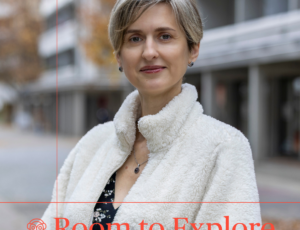
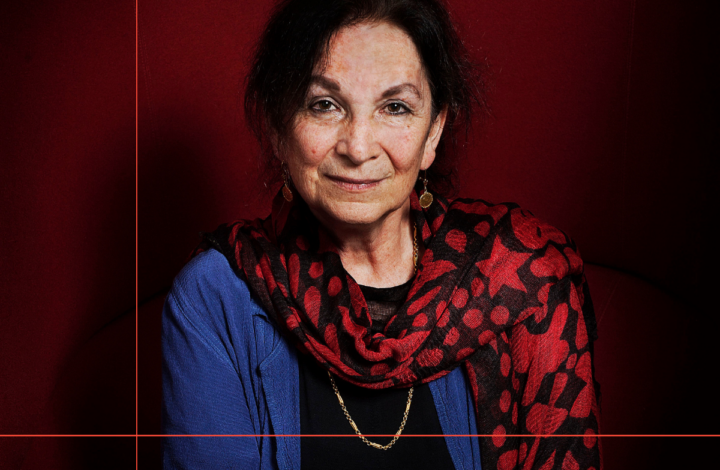
Annelies Moors is an anthropologist and professor emerita at the Amsterdam Institute for Social Science Research of the University of Amsterdam. Recently, she was the principal investigator of the European Research Council Advanced Grant Problematizing ‘Muslim Marriages’: Ambiguities and Contestations, and held the NIAS fellowship The Struggle for the Future of Ethnography.
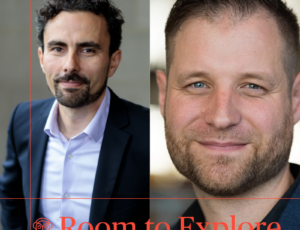
Markus Balkenhol is an anthropologist and senior researcher at the Meertens Institute. In his research, he develops ethnographic approaches to colonial heritage, memory politics and religion. Previously, he participated in the Dutch Research Council project Heritage Dynamics and, the Humanities in the European Research Area project Currents of Faith. His current work focuses on the afterlives of slavery, healing and the social lives of archives. He has served on the editorial team of Etnofoor and is a member of the external editorial board of the Amsterdam Museum Journal and the board of the Dutch Association of Anthropologists.
Podcast
Annick van Rinsum
Dear Annelies Moors and Markus Balkenhol, welcome to the NIAS Library.
Annelies Moors
Thank you.
Markus Balkenhol
Thank you.
Annick van Rinsum
I’m very happy to speak with both of you today about your book. Could you tell me briefly what your book is about?
Annelies Moors
I think that the main message of my book is that, in the last 30 years, we have witnessed a tremendous increase of research management in all different kinds of ways; in the terms of ethical reviews, integrity protocols, open science, etcetera. And what, in the course of time, struck me very much, and the reason why I actually wrote this book, is that I have the very strong sense that research management uses a particular way of doing research as normative, that is basically a positivistic way of doing research. If you are a person who uses an ethnographic approach, then you are continuously, facing problems because such a way of engaging with research management is in really intense relation with the ways in which ethnographers do research. So, I always say, as ethnographers it’s not so much that we resent doing ethics or that we are averse to including ethical issues et cetera. On the contrary. I think we consider it very important, but we do it in a different way. I think that is, in a nutshell, sort of the main message of the book.
Annick van Rinsum
In a different way, also on the basis of very different ideas of what science is and what truth-finding is…
Annelies Moors
Yes, I think, if you look at the way in which ethnographers do research and you compare it with a positivistic way of doing research, you see huge differences. In short, a positivistic way of research basically starts with hypotheses that need to be tested. You take a representative sample, you use sophisticated statistical methods and tools, and you aim to get a generalisable conclusion. Now, ethnographers do something very different. They are very much focused on the fact that all the research we do is strongly situational and contextual. We are not into the business of generalisation. So it’s very much about using an immersive method, a long-term commitment, and long-standing relationships with the people with whom you work.
We consider our way of doing research as relational and intersubjective. We are continuously interacting with our interlocutors. We also consider our interlocutors as co-producers of knowledge, not simply because they provide us with all sorts of information or with, what other people may call data. But also, because they share with us the particular insights, they have about how their particular social circle works. They also supply us with theoretical insights. So it’s intersubjective, it’s processual. Our relationship with our interlocutors develops through time. So that is also an important element. We do not make a sharp distinction between what is called collecting data and analysing data. I can give you an example, if you like, about how this makes a difference, for instance, in how we do interviews.
Annick van Rinsum
Yes, please.
Annelies Moors
Because I think that’s always a helpful example. If you do face-to-face interviews, which some people also do for survey research, and then you start again with your representative sample and you do these survey interviews. What is important then is that every interview follows the same protocol, which is that you try to be as neutral as possible and you don’t respond. So similarity between the different interviews is the main thing. You collect the results and then you go and analyse it.
What ethnographers do is, they have a conversation with one person about a particular topic, the topic of their research. And they learn something they didn’t know yet. Now, in the next interview, they use what they have learned in the first interview to structure the next interview. So the next interview is inevitably different from the first one. What matters as well is, when we do our kind of, I usually say, conversations. I don’t even use the term interviews, it’s more conversations. What matters then, is that when somebody says something particular, we ask more questions about that particular topic. The body language of the person you talk with matters in how you respond. So every interview is different from the preceding one. And that is precisely what you would not have in survey research. So you don’t get to this sort of generalisable knowledge, but you have a sort of cyclical process in which you gain in-depth insight in a particular topic; your topic of research. And on the basis of that, you can make propositions and you can make more general statements about particular phenomena, but they are not generalisable in the sense of quantitative research.
Annick van Rinsum
What I find very interesting then, is why these certain ideas about research are so pervasive and what needs to change to make them more accepted and legitimised as ethical ways or well thought of ways of doing research? What needs to change in our thinking?
Annelies Moors
I think that what we have to get away from is this sort of hierarchical thinking in academia,
in which certain types of research are considered to be more solid, and to provide us with this objective knowledge, which is then considered as valuable research. It’s fine if people want to engage in that kind of research, but it’s a problem if they consider that as normative and do not take seriously the fact that other fields, other approaches use a different perspective. So the book, and that’s why it’s also in the title, the book is basically a plea for epistemic diversity; for a recognition that there are different ways of doing research, that this is interesting and that it’s not the case thatcertain fields of research are much further ahead than other fields of research.
Annick van Rinsum
Markus Balkenhol, how do you perceive this problem that we are sketching?
Markus Balkenhol
I recognize much of what Annelies said. I’m a researcher at the Meertens Institute, an anthropologist, and I’ve been working on colonial heritage and memory in the past 15 years or so, mainly in the African-Surinamese community. Even in this time span, I’ve noticed an increase in forms that we have to fill in, requirements that we have to fulfill in terms of ethics, in terms of data management, in terms of privacy laws, and so on. And what I notice is that often, indeed, this is thought of from a vantage point of accountability and legal issues, rather than from an actual concern with the relationship between the researcher and the people they work with.
And for us as anthropologists, that’s really problematic because that relationship is what research for us is all about; cherishing the relationship, valuing the relationship and maintaining the relationship. It’s not just a one-off thing. So, I think for me the difference, also in research paradigms, is one between a transactional approach and a relational approach. The transactional approach is: you do an interview, the interviewee signs a consent form, is maybe even reimbursed and then you’re done. But, of course, the knowledge production continues right then: you think about it, you analyse it in whichever way, you publish it. This gives a reaction, people read it and so on. The process of knowledge production in which the research participants are involved continues, but without them. And for anthropologists, I would say, at least, in the way I do my ethnographic research, is that you build a relationship with your interlocutors. And that requires a certain responsibility on the part of the researcher. It’s not just something you waltz in and then you take out the material or the data or whatever you want to call it, and then you’re gone. I think it requires much more investment, which is often also personal and which can give you a different kind of insight into other peoples’ world than a different kind of researchcan. And I’m not saying one is better than the other or something, but one is more dominant than the other and more accepted than the other. And that’s where the hierarchy lies. That’s a problem that anthropologists face, but I think it’s also an epistemological problem, right? It’s not just something that we find annoying. It’s also that we, you know, if we concentrate only on one paradigm, then our knowledge of the world is limited. And I think that’s the real issue. I mean, I can fill in forms, that’s fine but […]
Annick van Rinsum
I think that’s a very strong point to make. It’s not something that only anthropologists face, but it is also part of our collective thinking: how do we gather knowledge in this world and how do we do that through science? And then, there’s a whole strand of doing science that has been developing for years and years that is still not accepted, or kind of pushed down by this dominant way of doing science. And then we’re missing so much information.
Annelies Moors
What is interesting: when I started the project, I really thought that anthropologists were the group that faced the most problems in this respect when it came to research management. But in the course of time, I came to realise that it’s not really anthropology versus the rest of the world. It’s much more an epistemological thing, about how you do research. It’s not simply anthropologists versus others. It’s also not even the sciences versus the humanities. It’s not qualitative researchversus quantitative research. These things all matter, but the whole thing about the epistemological position matters much more. Whether you really think that you can work with a positivistic approach for your research question, or whether you have to use a much more intersubjective, processual, interpretive way of working. So I think that is clear. It’s also clear that this is not simply a matter of approach, but it’s also a matter of whether you do the kind of research that can be controlled or not.
Another major difference is between lab-based experimental research in a very controlled environment and doing field research. And field research is not simply something that anthropologists do, but also biologists for instance. There is a big difference between those who work in labs and those who do field research. Because in the case of field research, you always depend on what a field is willing to give you. You have no control over the field. So rather than working with a design approach, it’s a discovery approach. These terms are from somebody else who has done a lot of work about ethics and ethnography, Rena Lederman. She emphasised this difference between design, where you can work with a design and you design your whole research beforehand, and then you can use all sorts of particular research requirements, and a discovery approach where you don’t know beforehand what you are going to find, which is very open-ended.
That also means that if you have to inform the people with whom you speak about all the details of the research, that you’re basically, actually misleading them because you yourself are not sure about where you’re going. So you can say: “well, I’m planning to do it”, but it can also go in very different ways. It depends very much on how, in my interactionwith you, the research actually develops. And that also places responsibility at a different moment, because I always think that in all these ethical reviews, a lot of responsibility lies prior to doing research or in the early phases, like how you have to work with consent, et cetera, which I’m not against, of course. I’m very much against the way in which it’s framed within research management. But, what really matters, I think, much more, or whatwe should pay more attention to, is our responsibility for what we publish. Because the moment we publish, people areoften much more affected by it, than by the sheer fact that we are talking with them about one or another particular issue.
Annick van Rinsum
These are all such interesting points to make. But also, a question that came to mind is, because I think the majority of people understand the value of science that can be repeated and that you do in labs, and because it is also the dominant way that we are taught what science is. But could you explain these other ways of science, what value they have, and why we should care about these epistemological approaches.
Markus Balkenhol
One thing that comes to mind is that, perhaps it takes as a point of departure a different understanding of what it means to be human; as something that is not static, but that is constantly changing. That means the interlocutors we talk to, but also the researcher. So if I do the same interview on a different day, I might have had a bad night or a very good night, maybe too late of a night, or I might be sick, in a bad mood and so on. That’ll affect the interview. And we take that into account to a certain extent.
Annick van Rinsum
You can go two routes: either you try your hardest to kind of erase all these facts or you accept, and that’s the way you would probably go about it, that these things are a factor, so you take them into account.
Markus Balkenhol
Right.
Annelies Moors
You acknowledge them.
Markus Balkenhol
Yes, exactly. I think you also acknowledge that you múst reflect on it. I say to my students, exactly like you said, for me, an interview is trying to get a good conversation going. It’s not about asking questions. But then students ask how that isrepresentative, and how is that repeatable. And I said, “well, it’s not”. I mean, it’s not repeatable and someone else cannot do the same interview. And actually, I cannot do the same interview again.
And so the only chance that we have at some kind of, that distinguishes what we do from just an opinion or just, you know, a conversation is that we reflect on that. That we reflect on: who is doing the interview? Who is being interviewed? How do we relate to one another? The body I’m doing the interview in matters. It matters how I identify; as man, in my case, white and so on. And that doesn’t mean that I can’t do interviews with someone who’s not man and white, but I do have to reflect on the kind of relation that’s going on. That’s often an uneven relation. And in that reflection is where we get to the truth, or reality, whatever you want to call it. That’s as close as we can get.
I think the error that is being made is that, quantitative science, positivistic science does not need to do that. And I think they should, right? And often a lot of quantitative and positivist scientists also do that. And a lot has been written on that. So there is a reflection. And we’re not where we were 50 years ago, let’s say. But it’s still there. And I think the error is that one is neutral, objective, disembodied, from a sort of God’s eye view, and the other is immersed, subjective, and hence not really science.
And just one last point, why I think this is crucial, is also that there is a difference between what we do as anthropologists, in this case, and just an opinion. So, I think it is still important to distinguish between scientific work and non-scientific work. But the distinction is not between positivist science and non-science.
Annick van Rinsum
Can you explain again, what it is then? How can we know that we are doing science? If we do it in this way.
Markus Balkenhol
I think it has to do with the training that we had. I mean, this is what we teach students, what they have to learn and also the things they have to unlearn, to be able to do scientific research.
Annelies Moors
In addition to that, I think also, using an ethnographic approach does not mean that you cannot use other kinds of material. Because I have used also statistical material in my own research. But you do it again, you reflect on it, and you have a conversation with people about it. So you can use all sorts of different kinds of materials, also material culture, whatever material you can use. It’s not like we can only use a particular kind of direct conversation. But it’s bringing together all these very different threads, and trying to learn from them and use them for the next step; the next moment in your research.
I always say, the first thing we try to do is to get a grasp of how people analyse their own social environment. So, you can then ask the question: are you just working at the level of the everyday knowledge of a particular category of people? Which, in a sense, is true, but we can also do other things. We can do other things in the sense that people often do not know the historical way in which particular situations have developed. They have an insight in their own social circle, but not how it fits in wider global processes, et cetera. So, there are other kinds of things we can add to it. We, of course,also read other literature, and we pick up stuff. That also helps us to gain a better understanding. But, I think, what we get at is that we are not so much trying to explaining things, but we are trying to understanding things. We try to understand how certain parts of society, depending on your research question, work.
And then, sometimes, we do research with people who are quite different from us. And then we have to really try to gain an understanding of unfamiliar practices. Now, the problem we then sometimes face is that when we try to explain our understanding of these particular phenomena, people often see it as condoning. And understanding is not the same as condoning. You can also gain an understanding of practices you strongly disagree with. So I think that is also a point that is often discussed.
Annick van Rinsum
Can you give me an example of a case where someone made the assumption that you, for example, condoned something because you had taken an effort to understand it?
Annelies Moors
Well, that is the starting point of my book, actually, that we try to gain an understanding of how women who traveled to Syria, to IS areas, entered into marriage. And we try to understand how they did that. And this was immediately picked up as condoning the fact that they were actually going to IS areas and liked it very much there. So yes, this happens regularly.
The point I also wanted to make is that, on the one hand, we do research with people who have unfamiliar practices, but we also do research at home, in familiar settings. And then you have to actually do something different. You have to really reflect on it and understand the particularities of these particular practices that are self-evident to you. So, you have to do something different in your work as an ethnographer when you do research about a practice that is very different, that you’re very unfamiliar with, because then you have to really learn a lot. And when you do research about a practice you’re very familiar with, like your own university, then you have to reflect on it, and you see how surprising, how strangeand particular practices actually are.
And what I did with the book was focus on research management. And what struck me there is how particular terms like replication, transparency, ethics, et cetera, are often used in a very common-sense way. The first thing I actually started with, was trying to reflect on what people actually mean when they use these terms. And that is how I got onto the different ways in which it’s used by people who actually follow a normative positivist approach and people who use an ethnographic approach.
Annick van Rinsum
How could you understand why people tend to make the assumption that you condone certain behaviors? I can imaginethey are scared that we are going to sympathise with people when we understand them.
Annelies Moors
I remember another anthropologist explaining this: often people say you have to develop empathy and I don’t think that is really the right term to use. It’s much more about being able to step into the shoes of somebody else, to understand how,in their position they do something, and how they do something without necessarily being sympathetic to it. Having empathy means you can also even have a tense relation.
I want to add, it also depends, of course… You also have to be careful with that, because a lot of these ethics regulations are based on the idea that the anthropologist is the powerful person in the relation with the interlocutors, and the interlocutors are vulnerable. And that is also something that, at least since the 1970s, has been very much discussed in anthropology, when the whole idea of the value of studying up became an important new perspective. Which means that your ethical reviews would very strongly emphasise the need to protect your interlocutors.
Somebody else made the comparison or raised the question whether our ethical responsibility is the same towards people who are victims of death squads, or who are active perpetrators of death squads. There are different opinions amongst ethnographers. Some people would say, no, they have to have one generalised ethics. And many people would say, it does make a substantial difference. And it does make a difference. And you see this, for instance, when you have the whole idea of the informed consent forms.
If you are working with somebody in a position of power, people can completely stop your research by simply refusing to sign a form then, if you think that you only should do research if your interlocutor has signed a particular form. So it’s very easy for people in a position of power then to stop your research.
Annick van Rinsum
And what’s your stance on the death squads, perpetrator versus victim?
Annelies Moors
I think you always have to act with sort of common decency towards your interlocutors, whatever their position is. Otherwise, you shouldn’t have a conversation with them. But at the same time, my sense of responsibility towards the victims in this case and the perpetrators is very different. And, again, as somebody else said – because in the book I’m actually continuously quoting other people because a lot of people have worked on this, but they have not brought all these different lines together, I think – But somebody else said, “I don’t mind doing discursive violence to people who actually are violent perpetrators.” And I do think there is value to a statement like that.
Markus Balkenhol
It’s also situational, right? I mean, the perpetrator of violence, who is unrepentant and continuing the violence is perhaps a different interlocutor than the one who wants to make amends and who is open to reconciliation. So they are still perpetrators but perhaps the ethical responsibility is affected by their different positionality.
Annelies Moors
Yes, you have a different responsibility then.
Annick van Rinsum
I have a question about this kind of aversion to understanding people we already have a judgment about, because I get a sense that there is something deeper there that relates to how we see science, but I’m not sure, so I’m really asking a very open-ended question.
Markus Balkenhol
I do have an idea. This is already an old phenomenon, right? I mean, people who are the pioneers have often faced that charge. It’s either not scientific or it’s ungodly or, there are ways of discrediting someone you don’t agree with. So, in that sense, it’s not quite new, but I do see that this is taking different forms and extents in the last decade or so. The attacks on science are, I would say, increasing and are becoming more vicious in a way. And that has to do with the role of social media and also politics quite honestly, and sort of a more general erosion of institutions also. That’s not just science and academia. This is not just something faced by qualitative research, but by all research. I mean, remember the corona pandemic where virologists were under attack. I think of climate science that is constantly under attack.
There’s been an erosion in the past 10 or 20 years, I think, that is accelerating. And it’s towards science, but it’s alsotowards the justice system, all kinds of institutions, of course, also the democratic institutions like parliaments and so on.And I think this cannot be seen in isolation of social media and the power of big tech. But it’s only part of it, and I don’t really have a conclusive… I mean, it’s a complex phenomenon, but I think it’s increasing. And I think the sort of attacks we’re facing are coming from all kinds of directions, but also the response of increased research management has to be understood in that context. So I think the attempt to legally and ethically make research completely watertight is happening in that context, at least. I’m not sure if it’s a response to it, but it does resonate, I would say.
Annick van Rinsum
A trend towards more control in general.
Markus Balkenhol
Yes, and also more anxiety, right? I mean, I feel there’s more anxiety of legal consequences, societal, political consequences. It has to do with money, of course. But I feel there’s more anxiety in the universe, in the academia.
Annick van Rinsum
Annelies, how do you see that?
Annelies Moors
Well, I think that you can see that in the rapid growth of public relations. I think that one of the things that you see is that – and that’s always quite amazing actually – what universities like is that you bring your research to the public and that you share your research results with a broader public so they can see the kind of work we do and share your insights with a broader public, et cetera. But, when there is any backlash, then the reaction is often: “well, maybe you should tone down a bit or let’s hope this goes away”. Or in extreme cases: “then do an audit” or something like that. So, I do think that there is a far greater concern of university management about the ways in which the public reception ofresearch has been taking place. That I do definitely see.
Annick van Rinsum
And how do you understand that?
Annelies Moors
In the end, money plays a big role because universities need finances and they need students and they need research grants, et cetera. So anything that universities consider as negative for their reputation… that means that they may get less students, they may get less funding, et cetera, which in the end means that they get a smaller budget. So I do think sometimes, these simple explanations may actually be valid.
Annick van Rinsum
I’m afraid that you’re completely right.
Annelies Moors
I think this is what has been going on for a long time. And then, at the same time, you get the general process of the juridification of all sorts of relations in society. So you see that also in the university. The legal department gets very concerned about all sorts of things that could be held against them.
Annick van Rinsum
What do you hope your book can do to maybe influence a counter-movement?
Annelies Moors
I started noticing the similarities. In the ethics review, you had the integrity protocols, you had the discussions about open science, and they all went in a certain direction. And the direction was, that one way of doing research was elevated to normative model. And if we as ethnographers wanted to do something differently, then we always had to claim the position of the exception. And I thought this was a problematic development. And I also saw that anthropologists respond in very different ways to it. You know, you have the anthropologists who engage, like what I try to do in this book, but there are not actually that many people who do it because it is a lot of work.
Annick van Rinsum
And you mean engage with these questions of epistemological […]
Annelies Moors
No, engage with research management. Engage with the sort of proposals people come up with, which is often very jargon-laden language. And you really have to sort of dive into it. And many people don’t have time to do that. So that is one element. People don’t really like doing it. Of course, there is also the way in which anthropologists have often worked, just to sort of ignore it, which may in certain circumstances be a very good tactic. Except it doesn’t work for our juniors, our PhD students, because they are much stricter surveyed than we are. And it doesn’t work for people who needfunding from outside sources, because they have to comply to what the ERC et cetera demands. So, for some people it will work to just simply ignore it and not be bothered by it. But for others, it’s simply not possible to do that. So that’s not quite fair. And the other way, what I don’t like, is people who actually—and I have a few examples in the book—think, “Yes, we should really take this very seriously because we should also be able to engage with replicability in our research. We should also engage with sharing our field notes, how we can possibly do that, et cetera, et cetera.” So they spend a tremendous amount of time trying to make themselves respectable, I think. That’s how I look at it. So I wrote the book because I saw these trends sort of converging, and I thought it may be just simply convenient for other people to have, you know, because it explains also the historical trends. So it’s also maybe helpful for people if they themselves want to engage more actively with research management. So it’s basically a tool.
Annick van Rinsum
Before we started the recording, you said, I can’t wait for this book to come out.
Markus Balkenhol
Yes. And I really mean that. Not only because I think, when I read it, it is so well written. That was a pleasure in and of itself. But I also thought, you know, finally, I have a text that I can give my students to read and […]
Annick van Rinsum
that they can quote.
Markus Balkenhol
that they can quote. A published book is of course also a form of institutionalisation of an argument and that is different than just […]
Annick van Rinsum
having the argument in class for example.
Markus Balkenhol
I’m making similar arguments, I would say, in class, but to have a text that is published greatly helps. Also because, you really show very well the development towards where we are now, and I think that helps understand that it’s not evident that all of this exists now, right? It’s possible to do it in a different way because we did do it in a different way for a long time. And, of course, the history of anthropology is anything but rosy. Yes, there were power differences, yes, it wasentangled with colonialism and so on. But, there was also always a critical reflection and always a sort of internal struggles and change and I think it’s important to recognize that. And I think you’re doing that in the book in a very important way.
Annelies Moors
Yes, that’s what I try to do with these different fields. I try to have this sort of critical reflection, especially about how, so often they use these common sense notions. So, they talk about replication, and ‘replication’ means so many different things. In the end, my conclusion was that actually we could also consider our way of doing research as being similar, close to replication in some sense. So it’s really interesting to see how in terms like ‘transparency’. I think that’s always a beautiful example because transparency, it sounds like such a self-evident sort of thing and such a nice virtue, but it can become very oppressive. So if you are in a position of power and you demand transparency from some people, but not from other people, right? Because that is what happens often in practice.
Certain categories of people, they are continuously questioned and they have to show their good intentions, et cetera, but for other people, it is taken for granted. It depends very much upon your social position, whether you are taken seriously or not. And the example is always Muslim researchers who do research about Islam. They really often have to legitimise themselves much more than when a non-Muslim researcher would do the same research. So it’s always certain categories of people, their points of view are taken for granted as being legit and other categories of people have to continually defend themselves and are considered as particularistic.
Markus Balkenhol
I think, it also helps. I have to say, the colleagues here at the humanities cluster who are involved in the ethics committees and the data management people, they are really trying to think with us. So it’s not us against them. I don’t see it that way. But there are certain institutional structures emerging that they are part of and that they are also conveying and embodying, regardless of how charitable they are, and that we are also part of. So we are subjected to that. And a book like this helps in showing that, when I’m asking difficult questions, they might find difficult, but I think critical questions about, for instance, you know, open science and making available our field notes, for the sake of replicability, for the sake of transparency and so on. And I said, “I will not do this.” And it’s very, very difficult to do, also because it’s contradicting other obligations like privacy regulations that makes it impossible to share. But a book or, for instance, also ethical codes drafted by the Dutch or other anthropological associations do help in conveying that it’s not just an idiosyncrasy by an individual researcher who wants to be difficult. It’s really a shared concern from a whole research community. And I think this book will help.
Annelies Moors
In that sense, the book is a performative act. You try to do something. You actually do try to do something with it because there is so much literature already. That was why it took me so much longer to write it than I originally thought. Because I had written articles., I had originally thought, this is actually very easy to write and I know what I want to say.
And then in the process of writing, I discovered that there is so much literature that you need to engage with and so many smart things other smart people have already discovered. So, it became a far more extensive exercise than I had imagined in the beginning.
But I don’t want to present it as if all these discussions about ethical review, et cetera, or data management are negative, because it is important to be careful with your data. And it is important to work in an ethical way. I just think that it’s the ways in which it is implemented. So, some of these ideas are important. Protection, for instance, of the people you are talking with. So, some of these ideas are fine. But then the way in which it becomes implemented, and becomes part of a sort of regulatory, bureaucratic way of working, that really does not at all guarantee an ethical way of working or do very much for data protection either. So I’m always struck by that, you know, and that is a bit the idea of ideals. Some of these ideals are fine, but the way in which they are then turned into practices becomes really problematic.
Markus Balkenhol
And somehow removed also from research practice. I mean, an ideal like transparency… who can be against that, right? We all want open science. But then the problems that would create in actual practice are often not reflected in thedrafting of regulations.
Annelies Moors
Not at all. And that is because there is so little reflection on what transparency would mean and how power also plays a role, that it’s something very different when transparency is demanded from above or when people from below ask for accountability. So these are very different things. So again, you really have to take power relations into consideration when you discuss these issues, just like with ethical regulations. It also matters whether you are doing research with somebody who is the head of a law firm or with somebody who is the cleaner in the law firm. There are very different kinds of responsibilities, at least in my view. As I said, not everybody will agree with that, but in my view, there are different kinds of responsibilities.
Annick van Rinsum
And of course, the whole point is that nothing is generalisable. But still, if you would say that we are in a certain trend in research management, can we have some general sense of which focus leads to this trend and where we could shift our focus to get out of the trend we are currently in?
Annelies Moors
It comes back to what you said before, Markus, that there are a lot of societal developments that actually push into a certain direction and that is you know the whole concern about financing universities and the importance of having at least some basic research funding rather than having institutions increasingly dependent upon external funding, which puts people in a very dependent situation often. And you can see that with the commercialisation of research. You see that very much. And you can also see every time, time and again, you see the scandals about these commercialised forms of research and what this actually means for research integrity. So there are these socio-economical developments. There are the political developments. There is the whole notion about the whole attempt of, also simply the wider trends that make risk taking increasingly problematic. Everything has to be legally protected. So there are a number of these, and of course there is the political situation in which the whole idea of uncertainty, and all these things that are sort of central to ethnographic work—such as uncertainty, ambiguity, et cetera—are problematic for a society that really likes to have clear answers. And I think that is also one of the trends that we are facing.
Annick van Rinsum
That we want clear answers?
Annelies Moors
We want clear answers to our problems. And what anthropologists usually show is that clear answers are often problematic, and create more problems rather than that they solve problems. And that we will have to realise that ambiguity and uncertainty is simply part of the part of life and that if our research does not also point to that, then ourresearch is not very solid.
Annick van Rinsum
We were planning to start with this but maybe we can end with this: Eduard Bonsel. In your book, you say “this is a person who showed me how doing theory can be liberating and otherwise I made might never have remained in academia.” Can you explain that?
Annelies Moors
Well, when you write acknowledgments, it’s always a difficult question who you include in your acknowledgments. So when I was writing and after I’d written this book, I was thinking about who should I include in the acknowledgments for this particular book.
I had to go back to how I started studying anthropology. I did not do so immediately after high school, but I first traveled with my partner in the Middle East and we studied Arabic in Syria. Now in Syria, I discovered ethnography. And this is really a funny story because we used to spend a lot of time in the French Institute, because the French Institute was the only place in Damascus where it was nice warm in winter because they had central heating. So we spent a lot of time in the French Institute and they had this huge library where they also had books which in hindsight, I understand now, were ethnographic.
So when I came back to the Netherlands, I decided to study anthropology. And then I saw that in the second year, there was this particular elective which focused on the historical representation of Palestine in Dutch newspapers. Now, very few people… Very few staff members were interested or had expertise in the field of the Middle East. So I immediately grabbed this opportunity and registered for this particular course. So I came there for the topic. Now, Eduard Bonsel is a very good teacher. And what he did, in his course, was that he showed us in his teaching how different paradigms matter, how different approaches, theoretical approaches matter in how you do research. So he actually awakened my interest in something that was actually much more fundamental, but which apparently in the first year of studying never registered with me. So he actually managed to show me how important it is to engage with something like the philosophy of science.
I call it liberating and, actually, I took that from the black feminist scholar Belle Hooks and she wrote about theory as a thing that can both be oppressive and liberating. It can be oppressive because it becomes a means of distinction. By using a particular jargon, by using a particular way of writing, you make it inaccessible for a lot of people. And so it becomes an oppressive instrument, as it were. But she said it also can be liberating because it actually gives you the tools to better understand how society works and especially how power relations work in society. So, things like economic capital, cultural capital, and in particular the power of definition. Who has the power of definition? This book is basically about who has the power of definition, what is ethical, what is doing research with integrity, and how do you put it in practice. That is why I actually started with Eduard Bonsel in this book.
Annick van Rinsum
Thank you very much for talking to me today.
Annelies Moors
Thank you.
Markus Balkenhol
Thank you.