

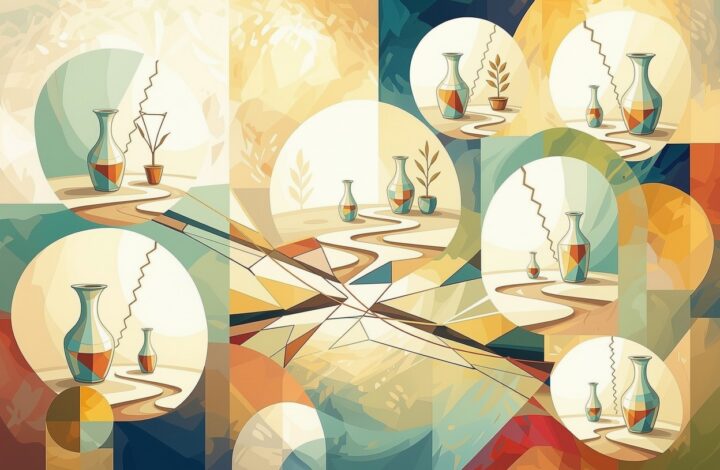
(Alternative) kin-making
Workshop II of the Theme Group Defamiliarizing Geslacht
The NIAS Theme-group Defamiliarizing Geslacht and the History department of the University of Amsterdam are organising three workshops on geslacht as generation. The first looks at geslacht as lineage, a way of connecting to the past. The second treats it as the making of (new) kin, which shapes what passes from one generation to the next. The third approaches it as reproduction, with a focus on (sexual) bodies.
Throughout the series, the aim is to defamiliarise what we think we know. We are interested in cracks and breaks in dominant systems, in alternatives and forms of repair, and in concrete policies and practices.
The notion of geslacht helps to bring together widely differing topics, disciplines, periods and contexts, and to think with what connects them as well as what sets them apart. It is not meant to gather all these differences under a single umbrella.
About this workshop
This second workshop explores how people make kin and kin-like relations, and how these relations shape the making of, and transfer to, the next generation. Sometimes this happens when words, concepts, forms or laws usually reserved for biological kinship are applied to other relationships. Think of godparents, adoptive families, step-parents and step-siblings, or the ‘father and mother’ of an orphanage. What does this use of family terms do, how does it work, and what does it make possible? And what might it conceal or break apart, as in cases of adoption or child separation?
Kin-like relations can also be created in practice, often through a house or household in the broadest sense, where several people, kin and non-kin, live together and share the work of generation. From African societies to the dynastic houses of premodern Europe’s ruling classes, and from monastic communities to slave ships and colonial childcare institutions, alternative kinships have grown in many places, often through nursing, care, cohabitation and co-parenting. Here too we ask what these relations do, and how they might broaden our understanding of what a family is or what raising a child involves. We also consider how such kinships relate to those formed through sexual desire, reproduction and biological ties.
Finally, kin-making does not happen only between humans. Animals, and perhaps plants or even machines, can become part of the oikos, the household relations in which kinship takes shape. The workshop presents new research in this area.
Presenters
Rachel Spronk (University of Amsterdam), Camilla de Koning (University of Manchester), Irene van Renswoude (KNAW), Helmer Helmers and Nina Lamal (NL-Lab, KNAW), Geertje Mak (NL-Lab, KNAW), Catherine Nash (Queen Mary University of London), Leonie Cornips and Marjo van Koppen (NL-Lab and Meertens Instituut, KNAW).
Participation
Everyone is welcome to take part. We ask participants to read the precirculated papers in advance and to join the discussions for at least half a day. Lunch is provided free of charge. Places are limited, so please register in advance.
Read more about the first workshop, (Healing) Broken lineages.
-
-
-
-
NIAS Book Series 11 February 2026EventInstitutional Surveillance and the Struggle for Epistemic Diversity