

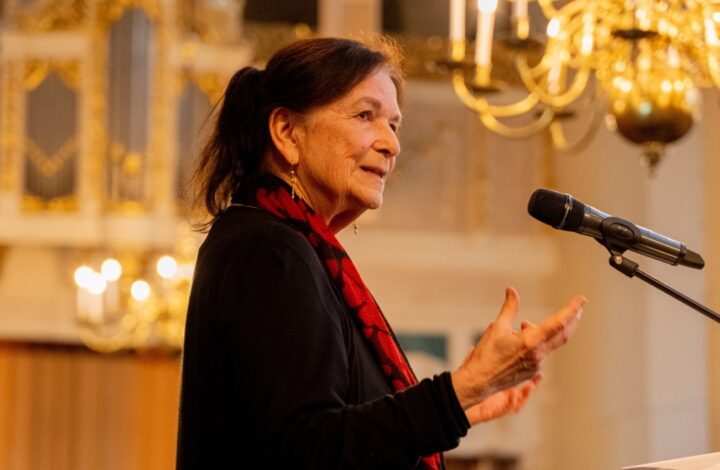
Uhlenbeck Lecture 2026
By Annelies Moors
Academic Freedom Revisited: Knowledge Production, Politics and Power
In the Netherlands, debates on academic freedom emerged in 2017 when parliamentarians called for a greater diversity of (political) views within academia. While this plea has also gained some traction in academia, it is also strongly contested.
In her presentation, Annelies Moors argues that, rather than a lack of viewpoint diversity, research policymaking and governance themselves constitute a threat to academic freedom. To start with, the emergence of the enterprising university and the concomitant expansion of the commercialization of research have a major impact on the direction of research.
More specifically, the claim that academic freedom is harmed by a lack of viewpoint diversity misrecognizes that academic freedom – in contrast to freedom of expression – is a qualified right, grounded in scholarly expertise and entailing responsibility for science and society.
Rather than viewpoint diversity, what matters for the enactment of academic freedom is the recognition of the value of epistemic diversity. Yet, developments in research management with respect to topics such as ethical review, open science, replication, and integrity protocols tend to privilege positivist approaches. This infringes on the academic freedom of scholars who employ other scholarly approaches, such as ethnography.
Annelies ends with a brief note on the politicization of academic freedom. As academic freedom comes with responsibility to society, the entanglement of knowledge production and politics is inevitable. This raises the question of how academic freedom is politicized and whose academic freedom matters.
About Annelies Moors
Annelies Moors is an anthropologist and professor emerita at the University of Amsterdam. She studied Arabic in Syria, and has conducted extensive fieldwork in Palestine and the Netherlands. Focusing on the entanglements of nation, class, gender and religion, marriage and reproduction, materiality and affect, and visuality and embodiment she has written extensively on topics such as Muslim family law, Islamic marriage and non-marriage; Muslim cultural politics; Muslim dress, fashion and face-veiling; wearing gold; migrant domestic labor; the visual media (postcards of Palestine), and doing ethnography.
Between 2001 and 2008 she was the Amsterdam chair for ISIM (International Institute for the Study of Islam in the Modern World). She held an ERC advanced grant on Problematising Muslim marriages and was a fellow at NIAS (Netherlands Institute for Advanced Studies). Recently she published Muslim marriage and non-marriage: where religion and politics meet intimate life (Leuven University Press, 2023, co-edited with Julie McBrien). Her book Doing ethnography: institutional surveillance and the struggle for epistemic diversity was published in February 2026.
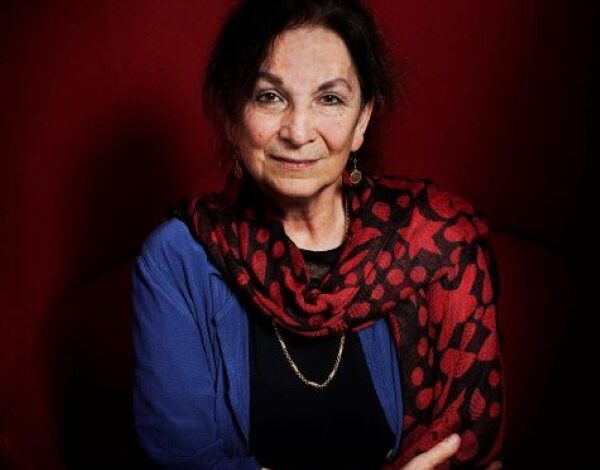
Programme of the Uhlenbeck Lecture
16.15 – 17.15 Uhlenbeck Lecture by Annelies Moors (Collaborative Room and online)
17.15 Drinks and Bites
-

-
-
-

NIAS Book Series 11 February 2026EventInstitutional Surveillance and the Struggle for Epistemic Diversity