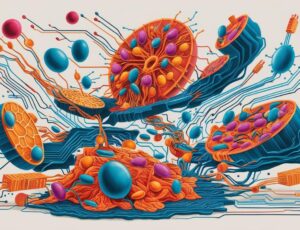
Abstraction, Broad Generalization, and Composition: The ABCs of Analogy
Year Group 2026/27
About the topic
Using formal, computational, and large language models as experimental testbeds, the project examines how analogical reasoning is represented, approaching it through the lenses of abstraction, generalisation, and composition. It aims to generate new hypotheses about key developmental stages in analogical reasoning; the relationship between language and analogical reasoning; and how insights from human development and artificial intelligence can inform and complement one another.
About the members
The group brings together Lucia Donatelli (coordinator), Martha Lewis, and Claire Stevenson, combining expertise from linguistics, computer science, and psychology.
Analogical reasoning sits at the intersection of all three disciplines: it involves language, cognition, and computation in ways that no single field can fully account for. Donatelli, a linguist, investigates how analogy and composition underpin the human capacity to recombine familiar concepts into new ones. Lewis, a computer scientist specialising in neurosymbolic AI, examines what representations AI models need in order to reason analogically, and how symbolic theories of reasoning can be realised in neural networks. Stevenson, a psychologist, traces the development of analogical reasoning in children — focusing on the shift from associative thinking to relational reasoning — and asks what this can tell us about how AI acquires, or fails to acquire, the same skill.
Together, the three researchers bring complementary methods and perspectives to a shared problem, creating the conditions for genuinely interdisciplinary insight into one of the most fundamental capacities of human — and artificial — minds.
Theme group participants


-
 Theme Group
Defamiliarizing Geslacht
-
 Theme Group
Academic freedom in context
-
 Theme Group
Why do adults change their beliefs?
-