Room to explore... the struggle for epistemic diversity
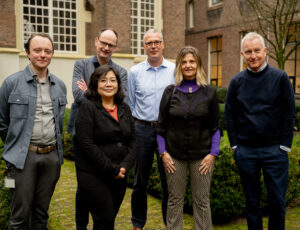
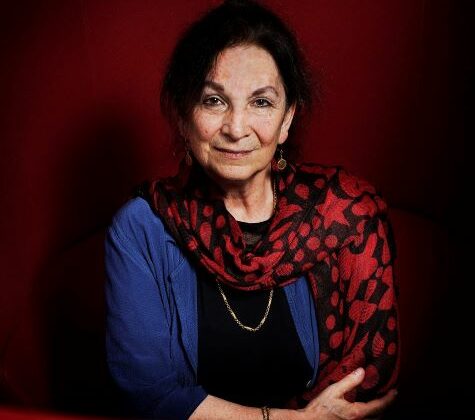
With Annelies Moors & Markus Balkenhol
16 February 2026The book is the first in a new NIAS series, NIAS Studies in Academic Freedom and Epistemic Diversity. Markus Balkenhol is a member of the editorial board for this series.
About the book
In recent decades, academic research has faced increasing institutional surveillance and regulation. Doing Ethnography traces the rise of ethical review procedures, open science mandates, and integrity protocols, examining how these developments shape ethnographic practice. The book critically engages with key themes such as doing no harm, informed consent, transparency, anonymity, researcher positionality, and the sharing of field notes.
Key arguments
The book argues that contemporary academia often enforces universal, bureaucratic forms of regulatory ethics. Rooted in quantitative and (post-)positivist paradigms, these frameworks frequently conflict with ethnography’s interpretive, intersubjective, and immersive approach. In response, the book calls for a situated, context-sensitive ethics of care, attentive to the specificities of ethnographic engagement. Ultimately, Doing Ethnography offers both a critical reflection on institutional power and a plea to recognise and sustain the epistemic diversity on which academic freedom depends.
Annelies Moors is Professor Emerita in the Social-Scientific Study of Contemporary Muslim Societies, Department of Anthropology, Amsterdam Institute of Social Science Research, University of Amsterdam.
Markus Balkenhol is an ethnology researcher at the Meertens Institute (KNAW). He obtained his PhD at the VU Amsterdam with a dissertation on the commemoration of slavery in the Netherlands. His research focuses on the anthropology of colonial heritage, memory politics and religion.
We are preparing the transcript to provide a text alternative. It will be available soon.
Room to explore is researched and interviewed by Annick van Rinsum. Find Annick on LinkedIn.