Let it no longer be a topic to be avoided
How to treat scholars at risk as colleagues
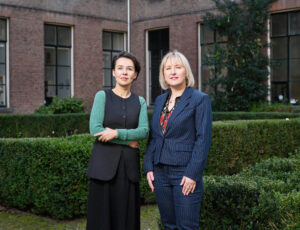
11 June 2026In this timely episode of the Stop the Demolition podcast, Judith Naeff and Dorine Schellens explore how Dutch higher-education institutions have responded to the needs of scholars at risk, the obstacles they continue to face, and how support mechanisms can be strengthened. Through conversations with scholars, policymakers, and institutional leaders, they examine both the achievements and the limitations of current initiatives.
Podcast on the obstacles they continue to face
Among their interlocutors are Linda Johnson, who reflects on the establishment and subsequent dismantling of Scholars at Risk Netherlands, and Ellen Rutten, who discusses The University of New Europe and the importance of building equitable and sustainable international partnerships. Saskia Bovijn, Dina Gusejnova, Aletta Kraneveld, and Ladan Rahbari likewise share their experiences of supporting scholars under threat, both within the Netherlands and across international academic networks.
Committed to fostering academic freedom
Particular attention is given to the role that institutes for advanced study can play in providing refuge, continuity, and intellectual community for displaced researchers. The Netherlands Institute for Advanced Study (NIAS) has long been committed to fostering academic freedom and creating space for scholars whose work and lives have been disrupted by conflict or oppression. NIAS initiated the Safe Haven Fellowship shortly after the start of the invasion of Ukraine in 2022. Initially, the fellowship was open only to Ukrainian researchers and scholars from Russia and Belarus without an institutional affiliation. In 2024, however, the programme was expanded to include researchers from war and conflict zones worldwide.
The episode concludes with insights from Ukrainian economist Oleksandra Moskalenko, a former NIAS Duisenberg Fellow, who reflects on what is needed to build a more resilient and sustainable infrastructure for scholars at risk. Drawing on both personal experience and broader institutional perspectives, she offers a compelling vision of how universities, funding bodies, and research institutes can collaborate to safeguard academic talent and uphold the values of an open scholarly community.
Upholding the values of an open scholarly community
The podcast’s principal recommendation is the establishment of a sustainable, centrally coordinated support structure in the Netherlands for scholars that cannot do their work due to (armed) conflict, persecution, repression or intimidation. Such a framework should include a central inventory of requests for support and of the opportunities available within institutions. Other key recommendations address funding and institutional responsibility. The podcast makers urge the academic community to regard scholars at risk as colleagues and to keep their situation firmly on the agenda. Learn more about the key takeaways on the left.