CAT-Group "Modelling practices in water governance" visits NIAS
At NIAS from Tuesday 7 to Friday 10 April
12 March 2026The development and use of quantitative models in water research and practice is both dominant and growing, importantly driven by recent technological developments. Although often presented as objective and neutral, models are controversial tools. They provide insights to predict future conditions of water systems, and opportunities to foster an integrated approach to tackle water-related challenges while addressing complexities related to managing fugitive resources such as water. Yet, models and modelling are specific ways of knowing water based on measurements and quantification. Foremost, models are profoundly shaped by the numerous, sometimes arbitrary, choices of the actors involved in the modelling process and by the context in which they are developed.
With this project we seek to jointly research modelling as it is used to manage and govern water. The project strengthens the collaboration between an interdisciplinary and international group of early career researchers studying water modelling in various contexts and from different perspectives, methodologies and approaches. We are developing a reflexive approach to modelling that is helpful to make the ethical implications involved in modelling practices explicit, and invites modellers, funders, and users to act upon these. With this project we seek to explore the challenges and opportunities to implement this novel approach through regular workshops, peer to peer learning and engagement with experts. Our efforts have culminated in peer-reviewed journal articles, blog articles, online forum discussion and a public event inviting practitioners to reflect and discuss about the responsibility as modeller for the influence a model can have.
Links
– Project website: https://cat-water-models.github.io/
– Introduction video at M-AKIT https://youtu.be/UsljiIMKnXc
– ter Horst, R., Alba, R., Vos, J., Rusca, M., Godinez-Madrigal, J., Babel, L.V., Veldwisch, G.J., Venot, J.P., Bonté, B., Walker, D.W. and Krueger, T. Making a case for power-sensitive water modelling: a literature review. Hydrology and Earth System Sciences, 28(17), pp.4157-4186. https://doi.org/10.5194/hess-28-4157-2024 , 2024.
– Alba, R., ter Horst, R., Tran, B.N., Klein, A., Unverzagt, K., Godinez-Madrigal, J., Verzijl, A., Rusca, M., Vos, J., Venot, J.-P., Zwarteveen, M. and Krueger, T. Situating Hydrological Modeling: A Proposal for Engaging With the Power of Models. WIREs Water 12(4): e70030, https://doi.org/10.1002/wat2.70030 , 2025.
– Godinez-Madrigal, J., ter Horst, R., Tran, B. and Alba, R.: Models do not think. The Water Dissensus – A Water Alternatives Forum, https://www.water-alternatives.org/index.php/blog/models , 2024.
– Public event https://www.un-ihe.org/events/seminar-so-models-have-social-and-political-life-what-does-mean-modeller-practice
Team
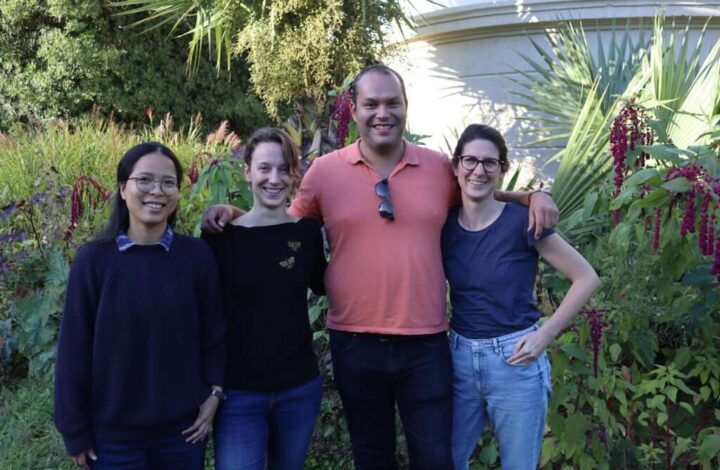
- Rossella Alba, PI, Geography Institute and at the Integrative Research Institute on Transformations of Human-Environment Systems (IRI THESys) of Humboldt University of Berlin
- Rozemarijn ter Horst, Water Resources Management group at Wageningen University.
- Jonatan Godinez Madrigal, Land and Water Management, IHE Delft Institute for Water Education
- Bich Tran, Land and Water Management, IHE Delft Institute for Water Education