Antoine Buyse appointed NIAS director
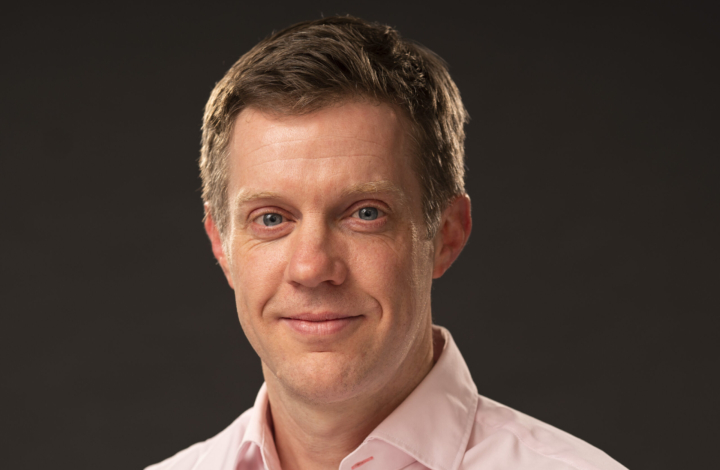
11 December 2025Buyse is now professor of Human Rights from a Multidisciplinary Perspective and director of the Netherlands Institute of Human Rights (SIM) at Utrecht University. His research interests include human rights under the ECHR, the rule of law from below, and the position of civil society organisations and human rights. He will succeed Jan Willem Duyvendak as director upon Duyvendak’s retirement.
Buyse is an ideal choice for NIAS, which functions as a forum for interdisciplinary dialogue emphasising new, milder forms of interdisciplinarity through cross-pollination. He is both a legal scholar and a historian, and is a former member of The Young Academy. ‘His background in the law will add a new dimension to NIAS’s evolution and strategy,’ explains Geert de Snoo, the Director of Research Policy of the Royal Netherlands Academy of Arts and Sciences, of which NIAS is part.
Adding a new dimension to NIAS
Buyse was the co-director of an interdisciplinary research area at Utrecht University. As he explains: ‘I’ve often witnessed how bringing together various academics and disciplines leads to a better understanding of differences. For a number of years now, NIAS has been firmly committed to attracting truly diverse groups of fellows from a wide range of academic cultures. The presence of artists, writers and journalists at NIAS adds yet another layer to this.’
Independent, curiosity-driven research
When asked which topics he intends to focus on in the years ahead, Buyse turns to the NIAS metaphor of the owl and the canary. ‘NIAS’s owl symbolizes wisdom and the freedom to venture where our curiosity leads us, away from the everyday concerns of academic work. But the privilege of being able to do so also gives us a responsibility. And that responsibility entails analysing what we need to conduct independent, curiosity-driven research. I wholeheartedly endorse NIAS’s commitment to expanding academic freedoms – and I deliberately use the plural here. Independence isn’t a given in science and scholarship. Science is under pressure in all sorts of ways: from commercialisation to austerity measures, and from distrust of experts to the sometimes blatant suppression and persecution of scientists and scholars.’
Canaries in the coalmine
‘That’s why we need canaries to warn us about obstacles,’ says Buyse, who will remain in his position as human rights professor at Utrecht University for one day a week. ‘For several years now, NIAS has led the way in examining the dimensions of those academic freedoms and the pressure placed on them. The canaries in academia need to issue their warnings well in advance, so that they don’t suffocate in the coalmine but rather survive to continue singing. Through this work, NIAS is also contributing directly to the role of the Academy – of which it is a part – as the guardian and interpreter of science and scholarship.’
NIAS offers space for, studies, and actively promotes academic freedoms
NIAS is one of the institutes of the Royal Netherlands Academy of Arts and Sciences (KNAW). Its mission is to offer space for, study and promote academic freedom. It does so by granting fellowships for curiosity-driven research to established and promising scholars and scientists, as well as to artists, writers and journalists. NIAS provides them with an intellectual refuge: a physical and intellectual space for interdisciplinary research in the humanities and social sciences.