The Legitimacy of the Welfare State
An Interview with Femke Roosma
[Merlijn Olnon] Where are you coming from? Can you tell us something about your background?
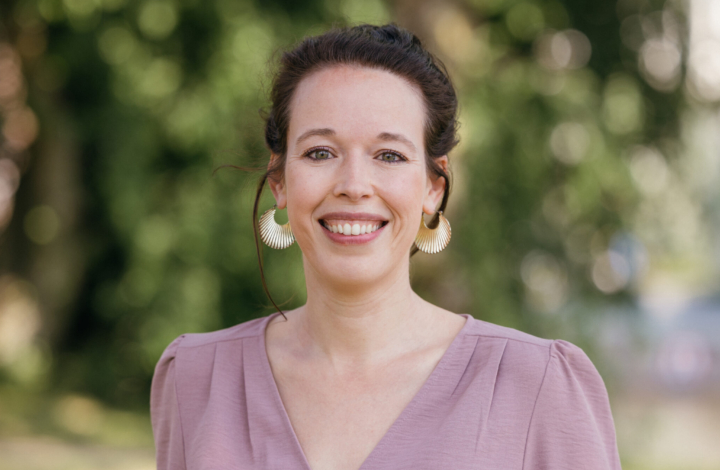
[Femke Roosma] I come from a social-democratic stonemason family from Buitenpost (north-east Friesland). Both my father and my grandfather — successive owners of the stonemasonry business, a family firm more than a hundred years old — sat on the municipal council for the Labour Party alongside their work, and were also board members for years in the housing association and various other civic organisations. My mother was involved in these too, on top of her full-time job and running the household. So I grew up with the idea that it is important to commit yourself to society, to the mienskip (community). Social democracy was instilled in me from an early age, and that experience of ‘politics’ reached further than the actual political craft or campaigning for a party — though we did that too. It was a broad set of ideals that gave you the duty to work for provisions for everyone, for people’s lives to improve, for the community as a collective to move forward.
That upbringing strongly shaped the path I took afterwards. I went to study political science at the University of Amsterdam. I wanted to understand how power works — who decides who gets what, and why. Once I had started that degree, I felt I needed to show my colours politically; I became a member of GroenLinks. I chose a party that, in my view, challenged power rather than wielded it. A party that shifted the goalposts through ideas — an ‘ideas party’ in search of power, rather than a power party in search of ideas, as Femke Halsema once put it so well.
[MO] How did you end up here at NIAS?
[FR] During my political science studies I was immediately drawn to researching the welfare state and its institutions — the institutions that determine who gets what, how redistribution works, and how social rights are safeguarded. I wrote my bachelor’s thesis on ‘social exclusion by conservative welfare states’. In my master’s thesis I looked at how social-democratic welfare states strengthen international solidarity as a spillover effect of building national solidarity through universal institutions. In my parallel philosophy degree I also engaged with political and social justice. The subject has never let me go.
After graduating I found a PhD position in Sociology at Tilburg University. There, my focus shifted from welfare state institutions to society itself, and I became concerned with the question of the welfare state’s legitimacy. How do different groups of people think about social policy, and what explains growing or declining support for welfare states?
When I started my PhD in Tilburg, I also became active in Amsterdam municipal politics. During my studies I had long kept actual political involvement at arm’s length — showing your colours is one thing, but making the actual leap from the social democracy I had grown up with to the more activist GroenLinks still felt like a big step. Eventually, through the UvA student council, I came into contact with active members who brought me into the local branch. At the 2010 elections I was placed eleventh on the GroenLinks Amsterdam list, a reserve position. I still was not ready to take the definitive step. But I did become a duo council member (also known as a committee member) and was able to speak in committees on the subjects of care, social shelter and poverty policy (2010–2014). In the years that followed I became a full council member and deputy group leader (2014–2018) and later group leader (2018–2022) for GroenLinks.
All of this I did alongside my academic work in Tilburg, where I continued to deepen my research into the welfare state, social policy, the deservingness of benefit recipients, and social policy alternatives such as basic income.
After leaving politics in 2022 — partly because council work alongside another job takes a considerable toll on one’s work-life balance, and partly because twelve years was enough — a new opportunity came my way.
The Dr. J.M. Den Uyl Chair at the University of Amsterdam became vacant (one day a week). The endowed chair was established by the Wiardi Beckman Foundation, the scientific bureau of the Labour Party, and its remit focuses on the development of democratic socialism in relation to science and society. Its specific — renewed — focus is on the welfare state and social policy, and how these can provide greater economic security and stronger social cohesion. The chair is housed in the department where I first began studying: political science. In this chair everything came together for me. A return to my personal and academic roots, building on my political and scholarly knowledge, whilst offering me the chance to make my scientific work socially relevant. I was appointed in July 2023, and in 2024 I delivered my inaugural lecture, entitled “Forging Discontent into Renewal: Towards a Democratic Welfare State”, opening with a quotation from Joop den Uyl.
[MO] What keeps you busy these days?
[FR] In academia I am still researching the legitimacy of the welfare state in a broad sense, with a specific focus on deservingness and trust. At the moment, for instance, I am principal investigator on a module containing a set of questions on ‘welfare attitudes’ in the European Social Survey; that survey will be conducted amongst a representative cross-section of the population in thirty European countries. It partly replicates a survey from 2008 (which I drew on heavily for my dissertation) and 2016, but we have also been able to add new questions. For the first time we shall ask how people weigh investment in — or cuts to — defence against investment in — or cuts to — social policy. That question is, sadly, painfully topical. And we can also ask Europeans for the first time about their support for deservingness principles: to what extent do people consider it justified for individuals to receive social benefits or provisions if they do not genuinely need them financially, or if they do not give something back to society? I am particularly curious whether people in certain countries are more or less inclined to support such principles, and whether in countries where these principles are considered less important there is also more mutual, institutional and political trust.
At the same time, over recent years I have been able to do increasingly qualitative research. Commissioned by the Amsterdam Centre of Expertise on Inequality, I am working with the ‘Work and Income’ consortium to investigate how trust in the local welfare state can be restored. We observe how debt counsellors and case managers in their daily work try to rebuild trust with Amsterdam residents. That trust has taken a severe blow because policy has become increasingly strict and conditional over recent decades. The complexity of the system means people are terrified of having to repay money or of getting into deeper trouble. The childcare benefits scandal is deeply embedded — even amongst people who were not its victims. Many social professionals, partly driven by local social policy, do their best to win back some of that trust, and they partly succeed. But the system itself changes little, and those social professionals can do little about that either. In other research too I see how the way our welfare state traps people in complex rules renders them insecure — existentially as well as practically. People genuinely want to take the step into work, but they dare not, because that step is surrounded by uncertainty and many negative incentives.
Beyond that, I am — as I learnt at home — active in civic organisations. I chair the board of the Straatalliantie, an organisation concerned with independent client support for homeless people and their collective advocacy. I am also a board member of the Waterheuvel, a clubhouse for people with psychiatric vulnerabilities.
My political activities are currently on the back burner, but as a citizen I want to keep speaking out. I attend demonstrations because I believe it is important to take a stand against the increasingly horrifying and frightening situation in the world. The genocide in Gaza and the rest of Palestine weighs on me particularly heavily.
I am also trying to pass on to my two young children the values I received at home. They come with me to demonstrations, and we talk about why that matters. And they are growing up in diverse Amsterdam — they take in so much more of the world compared with Buitenpost, where I grew up. I hope they will become engaged global citizens.
[MO] Can you tell us something about your research stay at NIAS?
[FR] During my time at NIAS I can devote far more time to my research. Normally I also teach, co-ordinate the Sector Plan on Social Inequality and Diversity in Tilburg, and serve as Research Programme Leader in our Sociology department. Many of these things I have been able to scale back, allowing me to focus on the various research projects.
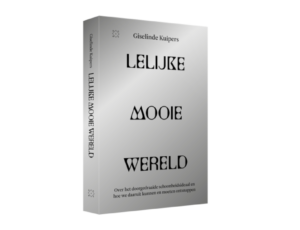
But my main goal during my stay at NIAS is to work on a popular science book about my academic work. It is about how our welfare state has developed an increasing obsession with making social policy fairer — more ‘just’. We have been ever more precisely defining who truly needs help, what people must give back in return, and when people genuinely deserve assistance. As a result our system has become ever more complex, with catastrophic consequences. People also feel increasingly disconnected from the welfare state, and the aforementioned distrust grows — particularly amongst those who need the welfare state most.
With my book I want to argue that if we dare to give up some of that ‘fairness’, we gain other important values in return. Values that were widely embraced during the rise of the welfare state but that we have lost sight of. The first is solidarity — through universal institutions such as the state pension (AOW), everyone was brought into the welfare state. The AOW still exists and nobody wants to abolish it, but in other areas we are increasingly asking whether people really need help and whether the state should be the one providing it. That causes people to disengage. If we make institutions more universal, people will be better able to feel a sense of belonging.
The second value is dignity. When the general social assistance act was introduced, it was still argued in parliament that the benefit had to be sufficient to afford ‘a pipe of tobacco and flowers on the table’ — because that would be part of a dignified existence. But in recent decades we have been ever more precisely determining who deserves what, by introducing ever stricter conditions with ever harsher sanctions. The ‘groceries fine’ — which initially required a benefit recipient to repay 7,000 euros because she had received groceries from her mother — shows that the dignity which was once so central no longer seems to form part of policy.
Finally, reciprocity is an important value we can reclaim — solidary and dignified reciprocity, that is, in which everyone is invited to make a contribution to society, rather than the tit-for-tat reciprocity that currently seems to be the stick used to push benefit recipients towards employment. If we dare to let go of these justice reflexes, our welfare state may become slightly less ‘fair’, but we shall gain important values in return. Values that will help us reduce complexity and strengthen trust.
At NIAS, I have so far been mainly occupied with setting up and thinking through the book; it is very much a work in progress. It is also a new genre for me. I am discovering my voice as a public intellectual. As a politician I had such a public voice, but wielding it as a scholar is quite different.
I am very grateful to be able to work on this project in the company of many wonderful researchers, journalists and an artist, who inspire me enormously. Everyone wants to learn from one another and is incredibly willing to help each other forward.
[MO] How does your current project relate to your earlier work?
[FR] For me it is a logical extension of what I have been working on for some time. The book is essentially about deservingness, as I researched it earlier through survey data and in observations of interactions with social professionals. But in the book I hope to go a step further, by giving those findings more direct social relevance in a volume accessible to a wider audience.
The chair, and writing my inaugural lecture, gave me a good stepping stone for that. There too I sought accessibility, as well as substantive breadth. My focus is shifting increasingly towards institutions and power (in the direction of political science) on the one hand, and the direct experiences of people in the welfare state (in the direction of social work) on the other. Whereas I previously looked mainly at institutions and at attitudes in surveys, I now also want to understand how people experience the welfare state from the inside, and what role political choices within that institutional context play in those experiences.
This popular science book is in that sense an important step: broadening the content and finding new ways to talk about my work.
In my future research I also want to place people’s experiences of the welfare state — and what they expect and fear from it — at the centre. My earlier research often captured a single moment in time. I want to zoom in more on how people engage with the welfare state over time, how they have come to experience it, and what that says about its long-term legitimacy.
[MO] What would you like your work to achieve?
[FR] I would like to make people think afresh about what the welfare state means — what its valuable aspects are, and where our obsession with ensuring that everyone gets precisely what they deserve can lead us. The welfare state lets people down, and sometimes that is an understatement. That discontent is understandable, and justified. But there are also things worth cherishing: solidarity, dignity, reciprocity. Values that once existed, and that can exist again. I hope to inspire people to put those back at the centre. As Leonard Cohen once sang: ‘There is a crack in everything, that’s how the light gets in.’
[MO] You warn against our obsession with who does or does not deserve what. But is it not the belief that losers are losers because they deserve it — and therefore that it is unjust to ask ‘hard-working Dutch people’ to help relieve their need — that is more decisive? Is this indeed what is happening in our welfare state? How do you read this emerging morality of meritocracy in the Dutch context? And above all, how can a plea for solidarity, dignity and reciprocity, in your view, help bring about change?
[FR] Yes, I do think this moral meritocracy plays a role, but not as strongly as in some other countries, such as the United States. In the Netherlands, ultimately, a very large proportion of the population does want poverty to be solved: there is considerable support for poverty policy and redistribution. The idea that anyone can end up in a situation where they need help is also stronger than the idea that ‘losers’ always deserve their situation. But we do want to attach strict conditions to assistance. You must show you genuinely need it, you must give something back — you have to earn it. And you must make every effort to get out of that situation. The ‘hard-working Dutch person’ is willing to pay, but only if their money is spent on people who deserve it. That is an important nuance.
And that is precisely the justice thinking I want to problematise. By imposing those norms of fairness so forcefully — show that you need it, take responsibility, give something back — we undermine other values.
And that is where solidarity, dignity and reciprocity come in. Those values ask something different of us than the question of whether someone ‘deserves’ help. Solidarity holds that provisions which are there for everyone matter more than whether everyone truly needs them. Dignity says that treating people well is more important than whether they meet every condition precisely. And solidary reciprocity wants to invite people to belong and to contribute to society, rather than compelling them to do so under threat of sanctions.
If we dare to acknowledge that our strict focus on ‘fairness’ also costs us something, and dare to let that focus go, we can reclaim a welfare state that feels as though it belongs to all of us. Including the ‘hard-working Dutch person’, if they happen to hit a rough patch. It can also contribute to making the system less complex, and in that way a system can feel more accessible, but also friendlier and closer to people. I think many people have a need for that. Even people who think they have little to do with the welfare state.