Community as ideal and practice
An interview with Tita Chico
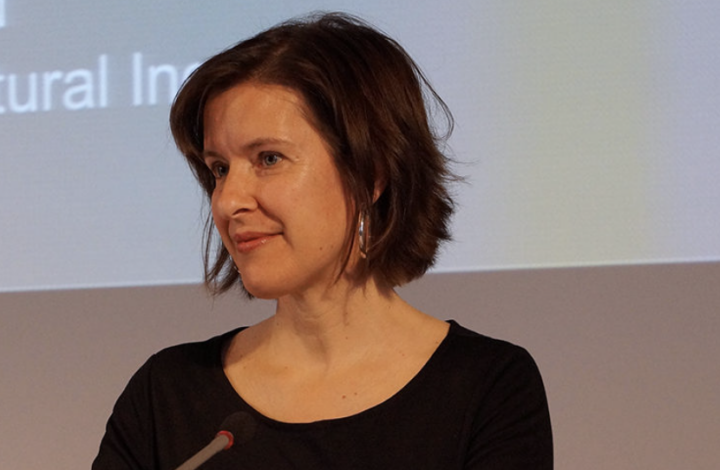
Chico emphasizes that knowledge is never neutral but emerges from historically situated forms, practices, and communities. Her work traces how past epistemologies inform present concerns—from artificial intelligence to surveillance and the erosion of a shared sense of reality—while foregrounding the importance of community and civic engagement.
The stories we tell ourselves
Chico traces her intellectual trajectory to a sustained concern with how stories about the past shape our understanding of the present. Central to her work is the idea that form and content are mutually constitutive: how something is told is inseparable from what it means. This informs her broader interest in the historicity of literary form and the role of genres, metaphors, and narratives in the making of knowledge.
Her early fascination with art and history—nurtured by her mother—continues to inform her work. In On Wonder, she presents wonder as both an object of study and a mode of thinking that foregrounds the limits of scientific explanation and opens space for more expansive ways of knowing.
Collective Futures: Community, Technology, and the Work of Hope
Chico highlights the interconnection of intellectual labour and community, showing how research, teaching, and civic engagement intersect. She argues that meaningful change requires more than inclusion within existing structures: institutions themselves must be reimagined.
Her reflections are grounded in a commitment to civic and political engagement. For Chico, the question of how to cultivate just communities is inseparable from her intellectual work. She challenges individualism and emphasizes collectivity as essential to both knowledge production and social transformation.
Devices of Enlightenment
In her forthcoming book, Devices of Enlightenment, Chico examines how objects and conceptual systems—“devices”—organize perception and understanding. These devices are never neutral: they shape knowledge, social relations, and ideas of the human.
Historical examples, such as the temperature scales developed by Daniel Gabriel Fahrenheit, show how seemingly objective tools embed cultural assumptions and contribute to processes of world-making.
Inherited frameworks
Chico’s work traces the historical entanglement of literature, science, and technology, showing that contemporary challenges—such as artificial intelligence and contested truths—are part of longer trajectories. One key consequence, she suggests, is the erosion of a shared sense of reality.
By understanding these inherited frameworks, we can more critically reflect on the systems shaping our world and begin to imagine them otherwise.